OEM Drone Propulsion Sourcing Guide: Matching to Mass Delivery
Published March:2026-06-18 · Updated:2026-06-30 · Elio
Table of Contents
Share This Article
In today’s rapidly advancing industrial UAV market, the success or failure of most OEM projects in sectors such as agriculture, logistics, firefighting, and inspection ultimately hinges on the compatibility and stability of the propulsion system.
Unlike consumer drones that prioritize ultra-lightweight design and recreational experiences, industrial UAVs are designed primarily for commercial productivity. These platforms demand long flight endurance, heavy payload capacities, and high reliability under harsh operating conditions. The UAV propulsion system not only determines overall flight efficiency and operational range but also directly impacts flight safety, airframe lifespan, and operational costs.
An incompatible or insufficiently validated propulsion solution can lead to excessive power consumption and reduced flight endurance at best. In extreme cases, propulsion system failure may result in a crash, causing significant losses of valuable R&D investments, mission payloads, and operational assets.
Core Requirements to Define Before OEM Procurement
Prior to issuing a Request for Information (RFI) or Request for Quote (RFQ) to suppliers, the OEM team must define the aircraft architecture and clarify core operational requirements.
1、 Airframe Type and Propulsion Architecture
The choice between multirotor (quadcopter, hexacopter, or octocopter), coaxial dual-propeller, tilt-rotor, or hybrid platforms dictates the propulsion setup. Each configuration demands entirely different motor KV values, ESC current ratings, and propeller profiles.
Multirotors require high dynamic response and hovering stability.
VTOL (Vertical Take-Off and Landing) Fixed-Wing platforms must balance high thrust during the vertical phase with ultra-low energy consumption during cruise.
Traditional Unmanned Helicopters place rigorous demands on high-torque power output. Component selection logic varies fundamentally across these architectures.
2、Maximum Take-Off Weight (MTOW)
MTOW serves as the baseline parameter for propulsion system selection because it determines the total required thrust. Generally, industrial UAVs require a thrust-to-weight ratio of at least 2:1 to ensure sufficient power redundancy during strong winds or emergency maneuvers.
3、 Application Scenarios and System Priorities
The operational environment dictates performance trade-offs. For instance:
-Agricultural Drones encounter corrosive pesticides daily, making corrosion resistance and easy cleaning the top protective priorities.
-Mapping and Inspection Drones prioritize maximized flight endurance, meaning system efficiency (grams per Watt, g/W) is the primary metric.
4、Battery System and Voltage Platform
Selecting the correct voltage platform (such as 12S, 14S, or higher) is critical. High-voltage platforms significantly reduce current draw while delivering the same power output. This minimizes wiring heat and energy losses, directly boosting efficiency for heavy-lift UAVs, though it demands higher insulation standards for ESCs and motors.
5、 Propeller Dimensions and Arm Layout
Airframe wheelbase and structural constraints limit the maximum allowable propeller size. Furthermore, the distribution of clockwise/counterclockwise (CW/CCW) props and the choice between coaxial dual-propeller layouts versus coplanar single-propeller layouts heavily influence airflow efficiency and power matching. Propeller sizing must also account for transport vehicle dimensions.
6、 Operating Environments and Weather Conditions
Whether the UAV operates at high altitudes (e.g., 4,000 meters) or in extreme desert temperatures (e.g., 50°C) introduces unique challenges. High altitudes present thin air, requiring larger propellers or higher motor RPMs to compensate for thrust loss. Conversely, extreme temperatures place significant demands on the system’s thermal management capabilities and low-temperature durability.
A complete industrial UAV propulsion system comprises four core components.
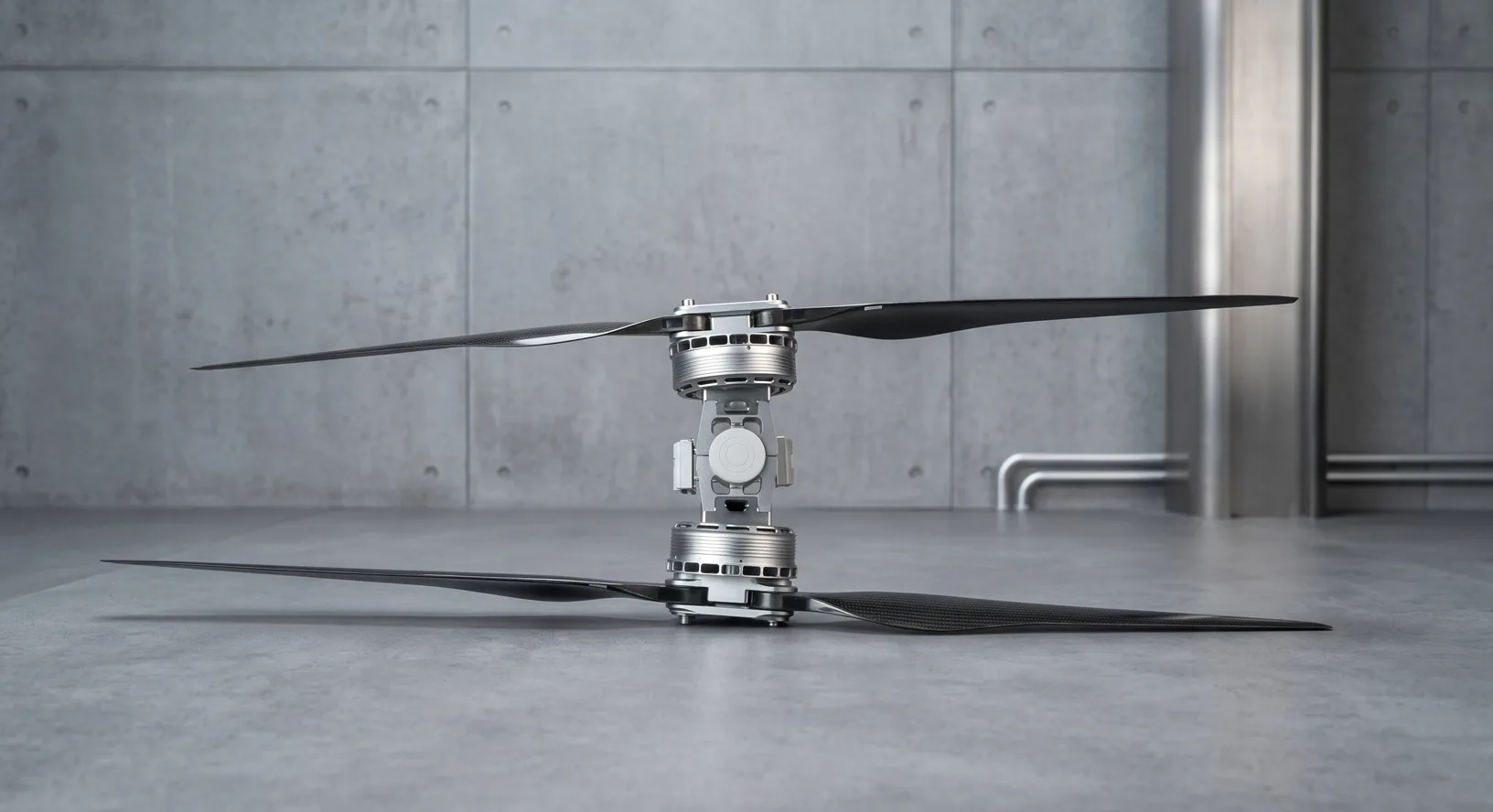
A complete industrial-grade propulsion system comprises four core components. Premium performance relies on deep synergy among these interrelated parts rather than a simple stacking of standalone specifications.
UAV Propulsion System
Motor
ESC
Battery
Propeller
Delivers Torque
Controls Speed
Supplies Power
Generates Thrust
1、Motors: Defining Torque and Efficiency
Outrunner brushless motors are highly recommended as the primary power source. Industrial-grade brushless motors must be evaluated not only by KV values but also by stator size, magnet temperature ratings, and torque response characteristics. High-quality motors maintain optimal efficiency across a broad RPM band and ensure an extended operational lifespan.
2、ESCs: The Root of Hidden Project Risks
The Electronic Speed Controller (ESC) serves as the critical interface between the flight controller and the motor. Unexplained altitude drops, motor lockups, or mid-air burnouts are frequently caused by ESC failures. Modern industrial ESCs require mature Field-Oriented Control (FOC) algorithms, minimal commutation latency, and comprehensive protection mechanisms against overcurrent, overtemperature, and motor stalling. Selecting industrial-grade ESCs with premium thermal management is highly advised.
3、Propellers: The Final Determinant of Flight Efficiency
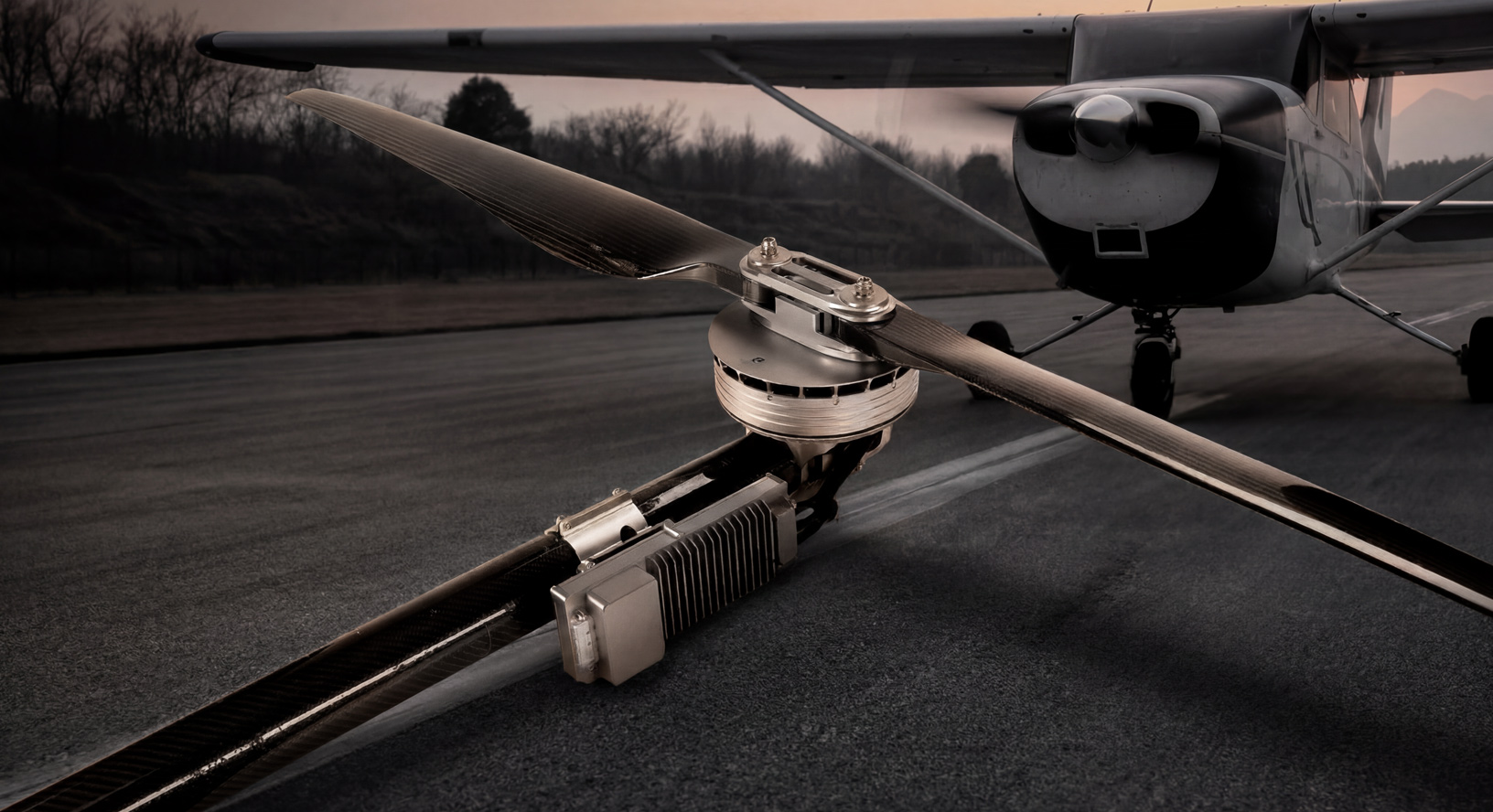
The mechanical work generated by the motor and ESC transforms into aerodynamic force through the blades. Propeller blade design and material rigidity (such as high-performance carbon fiber, which offers clear advantages in strength, weight, and aerodynamic efficiency) directly influence structural stability at high rotational speeds. Evaluation must focus on the combined efficiency of the motor + ESC + propeller assembly rather than isolated static thrust metrics.
4、Batteries and Power Systems
Battery assessment goes beyond cell energy density (Wh/kg) to include the functionality and reliability of the Battery Management System (BMS). Utilizing high-rate lithium-polymer or solid-state batteries combined with advanced BMS management ensures stable heat control and cell consistency under high-rate industrial discharges, contributing significantly to operational safety and mission reliability.
Common Pitfalls in OEM Propulsion Procurement
In supply chain management, inexperienced teams often fall prey to flashy specifications listed on datasheets.
1、Fixating Solely on Maximum Thrust
Procurement teams frequently focus exclusively on the "maximum thrust" metric. However, industrial UAVs spend over 90% of flight time at hover or economical cruise points. If efficiency at hover throttle (approx. 50% thrust) is poor, a high maximum thrust rating cannot compensate for low real-world efficiency and severe overheating.
2、Testing Single-Axis Benches Instead of the Full Airframe
A propulsion system that performs well on a static single-axis test stand may behave differently once integrated into the full airframe. Real-world factors like arm vibration, structural resonance, aerodynamic interference (flow-field turbulence), and fuselage drag significantly lower performance. Without full-system verification, bench data remains incomplete.
3、Mismatching Motors, ESCs, and Propellers
Pairing large propellers with low-RPM, high-torque motors, or small propellers with high-RPM motors is standard practice. However, introducing an ESC that does not support the motor pole count or lacks optimized FOC parameters leads to audible high-pitched whining, extreme heat generation, or catastrophic desynchronization (slipping) potentially resulting in loss of attitude control or vehicle crashes.
4、Neglecting Thermal Design
Operating continuously for multiple hours generates extreme heat within motors and ESCs. If a propulsion system utilizes a sealed dustproof/waterproof design but lacks highly efficient thermal conductivity media or optimized cooling channels, safety risks increase, increasing the risk of magnet demagnetization, MOSFET failure, and reduced system reliability.
5、Overlooking Batch Consistency
Evaluation samples handpicked for prototype testing may perform flawlessly. However, during volume procurement, variations in magnet strength, enamel wire winding processes, or component batches can result in inconsistent quality across units. This variance increases airframe vibration and complicates flight controller tuning.
Evaluating OEM Propulsion System Suppliers
Selecting a high-quality supplier capable of supporting a long-term partnership is a critical factor in reducing project risk and ensuring long-term program success.
Assessment Dimension
Characteristics of Reliable Suppliers
Potential Red Flags
System-Level Testing Capabilities
Equipped with professional automated thrust test benches, environmental climate chambers, thermal testing equipment, and dynamic balancers.
Provides only basic specification sheets; cannot deliver complete dual-axis or system-level co-validation reports.
Industry Project Experience
Holds proven production and volume delivery track records with major manufacturers; familiar with stringent standards in military, law enforcement, mapping, or maritime sectors.
Background is limited to consumer-grade RC models or toy propulsion; lacks verifiable experience in heavy-lift industrial UAV projects.
Customization Support
Capable of adjusting propulsion architecture, performance characteristics, and firmware based on specific client needs; offers full-ground-up custom designs when necessary.
Sells off-the-shelf standard products only; rejects structural or performance tuning requests.
Stable Volume Delivery
Certified under ISO9001; utilizes high-production automation alongside rigorous Incoming Quality Control (IQC) and Outgoing Quality Control (OQC).
Delivery schedules rely heavily on manual assembly; performance fluctuates widely across batches; production cannot scale with project timelines.
System-Level Support
Field or remote engineers collaborate directly with OEM teams for flight controller PID tuning and troubleshoot via black box logs.
After-sales service is restricted to basic component replacement; incapable of analyzing complex hardware/software system conflicts.
Need help selecting a propulsion system for your UAV project?
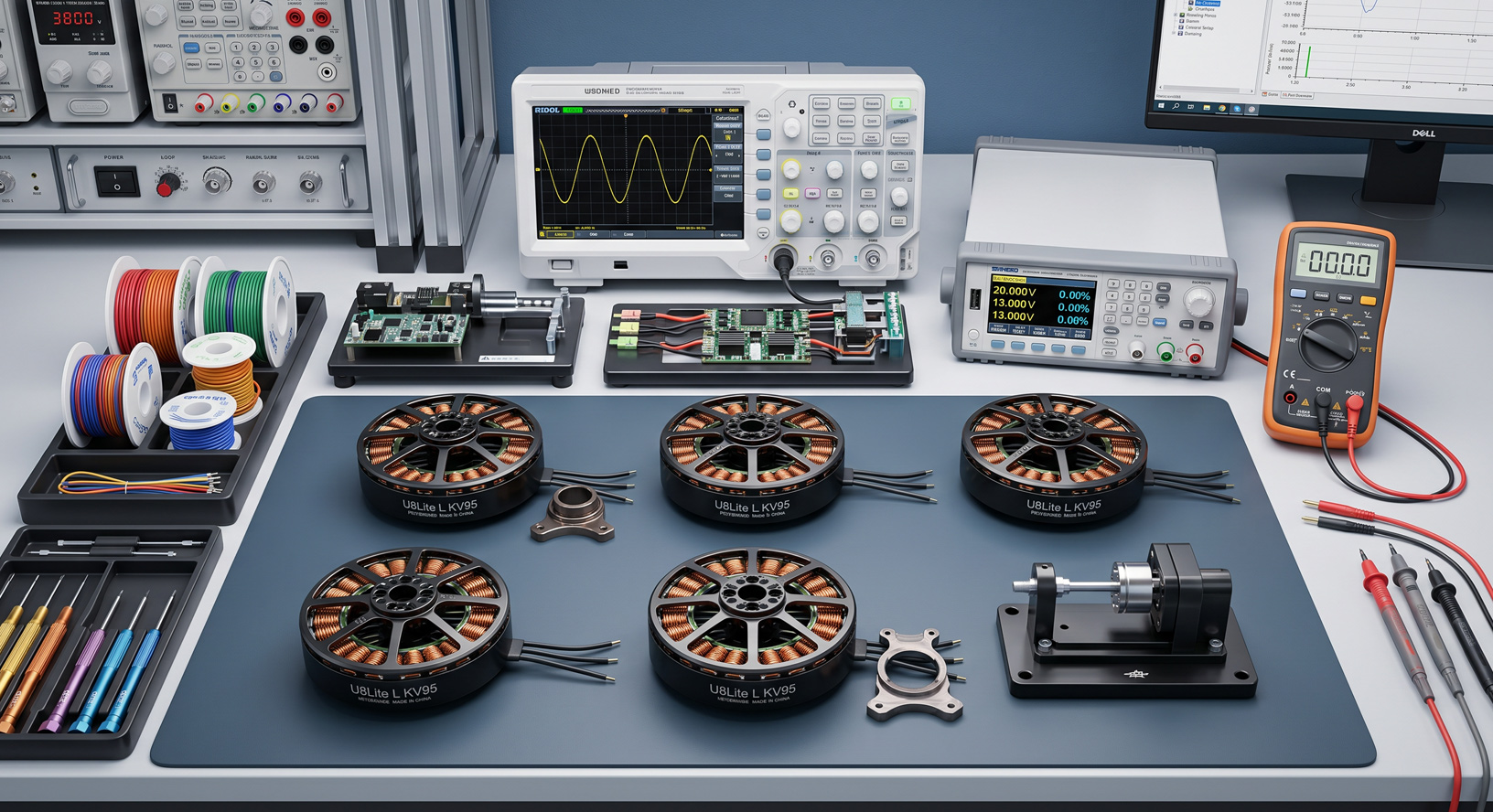
Conduct laboratory bench tests on the motor, ESC, and propeller across 10% to 100% throttle ranges. Map efficiency curves across the full voltage spectrum and analyze thermal equilibrium.
2、Extreme Environment Testing
Subject the propulsion assembly to environmental chambers (e.g., -20°C to 60°C) for prolonged full-load endurance testing, high-salt spray, and heavy rain exposure to expose hidden hardware vulnerabilities.
3、Batch Consistency Verification
Sample units randomly from pre-production (PP) batches to compare RPM, torque, and power consumption tolerances, ensuring batch yields and key performance metrics stay safely within required boundaries.
4、In-Flight Data Validation
Conduct hundreds of hours of real-world flight testing on the full airframe. Extract empirical data—such as current fluctuations, ESC temperatures, and motor vibration frequencies—via ground control stations and flight controller black boxes to close the optimization loop.
How to Select an Industrial UAV Propulsion System? /Sector-Specific Procurement Priorities
UAVs in different industry verticals require distinct propulsion system requirements; therefore, procurement decisions should be tailored to specific operational needs.
Type
Core Design
Core Requirements
Agricultural UAV Propulsion (Spraying & Seeding)
High Protection & High Durability
Ingress Protection: Must meet at least IPX6 ratings to withstand high-pressure water washing.
Corrosion Resistance: Core components, including motors and cabling, require high chemical resistance against harsh pesticides.
Mechanical Durability: Must withstand high torque stresses caused by heavy payloads and frequent takeoff/landing cycles.
Logistics UAV Propulsion (Commercial Delivery)
High Efficiency & High Redundancy
Economic Efficiency: Commercial operations demand optimized operating costs per delivery mission, requiring maximum hover and cruise efficiency.
Safety Redundancy: Must support multi-axis power redundancy to increase the likelihood of a safe emergency landing in the event of a single-motor failure.
Firefighting UAV Propulsion (Emergency Rescue)
Extreme Thermal Resistance & Ultra-Thrust Output
Flame-Retardant/High-Temp Materials: For close-proximity fire operations, all component housings and wiring harnesses must utilize high-grade flame-retardant, heat-resistant materials.
Instantaneous Peak Thrust: Demands exceptional peak thrust responsiveness to counteract severe thermal updrafts and turbulent wind shear over active fire zones.
Inspection UAV Propulsion (Power Lines, Security)
Low Noise & Extended Flight Endurance
Electromagnetic Compatibility (EMC): For power line inspections and urban security, systems must minimize EMI emissions to safeguard onboard sensors and video downlinks.
Acoustic Optimization: Propellers and motors require low-noise profiles to accommodate night operations and continuous long-duration flights.
OEM UAV Propulsion System Procurement Checklist
Propulsion Parameters
System Reliability
Supply Chain
Engineering Support
KV Rating
Temperature Rise
Minimum Order Quantity (MOQ)
Customization Support
Voltage Platform
Ingress Protection (IP)
Lead Times / Delivery Cycles
Optimization Matching Advice
Max Continuous Current
Vibration Tolerances
Performance Consistency
Flight Testing Assistance
Recommended Propeller
EMI / EMC Profile
Warranty Framework
…
Thrust-to-Weight Ratio
… …
… …
… …
If technical challenges arise during propulsion matching or airframe architecture configuration, please contact the T-MOTOR Expert Team directly. Assistance is readily available to clarify core requirements and support your development process, regardless of final product selection.
Product Recommendations
Since inception, T-MOTOR has prioritized focused on delivering reliable, high-performance propulsion solutions, earning global recognition through strict quality control and rigorous quality control and engineering expertise. The T-MOTOR R&D team brings extensive engineering experience in multirotor, fixed-wing, and VTOL platforms, utilizing innovative technology to develop high-end product lines tailored to market demands.
Q1: Why Is Actual Flight Time Shorter Than Datasheet Estimates?
Supplier datasheet parameters are typically captured on static thrust test benches operating within an undisturbed, " controlled laboratory conditions ". However, when integrated onto an actual airframe, the propulsion system experiences aerodynamic blocking losses and multi-axis wake flow interference.
Therefore, when calculating aircraft endurance based on bench efficiency, factoring in a performance margin during initial design stages is highly recommended. Peak bench data must not be treated as a direct reflection of real-world flight performance.
Q2: Should OEMs Purchase Motors, ESCs, and Propellers as a Complete System?
A UAV propulsion system is a highly integrated system where electrical, magnetic, mechanical, and thermal forces are highly coupled. Sourcing separate components introduces severe risks regarding system matching and firmware tuning.
Industrial-grade FOC ESC firmware requires precise parameter tuning matching the specific motor. Mismatched configurations cause the ESC to lose track of rotor positioning, triggering desynchronization or sudden RPM drops that result in mid-air crashes. Procuring factory-optimized propulsion kits that have undergone extensive system-level verification remains the best practice.
Q3: How Can OEMs Verify a Supplier’s Batch Consistency Claims?
The greatest risk in industrial-grade projects is experiencing flawless performance during the prototype stage followed by continuous failures during mass production. To verify volume consistency, enforce the following requirements during supplier qualification:
Request Outgoing Inspection Reports: Analyze whether the parameter tolerances of mass-produced motors stay within specified engineering tolerances.
Verify Propeller Dynamic Balancing Standards: Evaluate whether the factory's static and dynamic balancing inspection processes are rigorous and reasonable.
Review Core Component Supply Chains: Confirm whether critical sub-components are secured through long-term, stable supply channels to prevent unannounced or unauthorized parts substitution during manufacturing shortages.
Q4: Which ESC Communication Protocol Is Best for Industrial UAVs?
For industrial-grade UAV projects, CAN-based communication is often preferred, followed by advanced digital versions of DShot, depending on specific system requirements.
PWM: A legacy analog protocol susceptible to electromagnetic interference (EMI), which causes signal distortion. It is restricted to one-way communication, meaning the flight controller cannot access real-world ESC status data.
CAN: Supports high-speed, bidirectional communication and offers exceptional noise immunity. The flight controller reads telemetry data in real time, significantly improving flight safety margins.
DShot: A digital signal offering strong noise immunity and rapid refresh rates, ideal for small-to-medium UAV platforms or FPV systems demanding high dynamic responsiveness.