The Guide For Heavy-Lift UAV Propulsion System Selection
Published March:2026-06-08 · Updated:2026-06-17 · Elio
Table of Contents
Share This Article
With the widespread adoption of heavy-lift UAVs in logistics, emergency response, and precision agriculture, the requirements for propulsion systems are becoming increasingly demanding, with a greater emphasis on high thrust, extended endurance, stability, and reliable operation under complex working conditions.
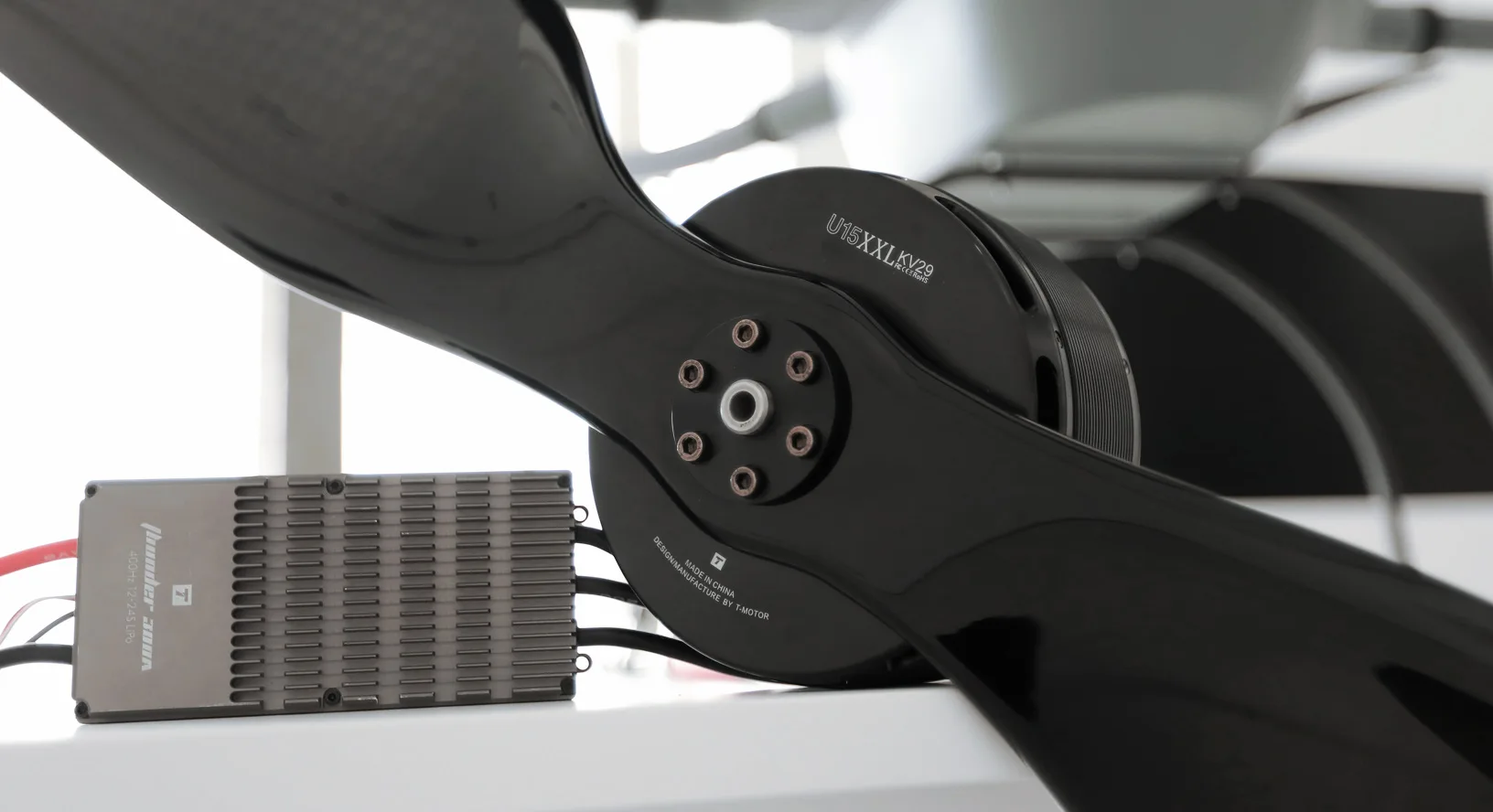
As the core of heavy-duty UAVs, the propulsion system directly affects flight time, payload capacity, flight stability, and overall energy consumption performance of the UAV. Selecting a suitable power system can significantly improve the performance and system reliability. A complete propulsion system typically consists of the motor, propeller, ESC, and battery; these four components must function as a synergistic unit rather and working together rather than in isolation. However, if the selection is unreasonable, even if one component performs excellently, there will still be problems such as insufficient thrust, low efficiency, severe overheating, or flight failures.
Heavy-lift UAVs are generally defined by a single-axis thrust of 10kg. T-MOTOR sets a higher benchmark with a rated thrust of 25kg and a maximum takeoff weight(MTOW)exceeding 100kg for quadcopters, with an emphasis on sustained high-efficiency output and superior reliability.
Selection Factors
1.Thrust
Thrust is the primary consideration in the selection of a propulsion system for heavy-lift drones. The first step is to determine the required single-axis rated thrust and MTOW when choosing the appropriate power system.
In addition, the One Engine Inoperative (OEI) scenarios must be carefully considered. For example, in an octocopter: if one motor fails, the remaining power must be sufficient to support a safe emergency landing of the heavy-lift UAV. Therefore, the power system should not only meet normal industrial requirements but also provide enough redundancy to handle takeoff, climbing, wind resistance, and unexpected failures.
Generally, the greater the thrust margin, the more it enhances flight stability and safety. But it also leads to increased system weight, power consumption, and cost. Therefore, the reasonable balance must be achieved between safety, endurance, and cost-effectiveness.
Recommended calculation:
Max. Thrust Per Motor = MTOW / Number of motors * 2.2~2.5
For example, an 80kg MTOW octocopter is recommended to have a single-axis rated thrust of at least 10kg to ensure reasonable safety margin and OEI capability.
Additionally, it is strongly advised to prioritize the thrust curve of the motor, selecting motors that achieve the required thrust at 50%–70% throttle to avoid long-term operation at full throttle. This not only improves system efficiency, reduces heat generation, and extends service life, but also maintains a sufficient power margin for subsequent flight maneuvers.
2.Propeller
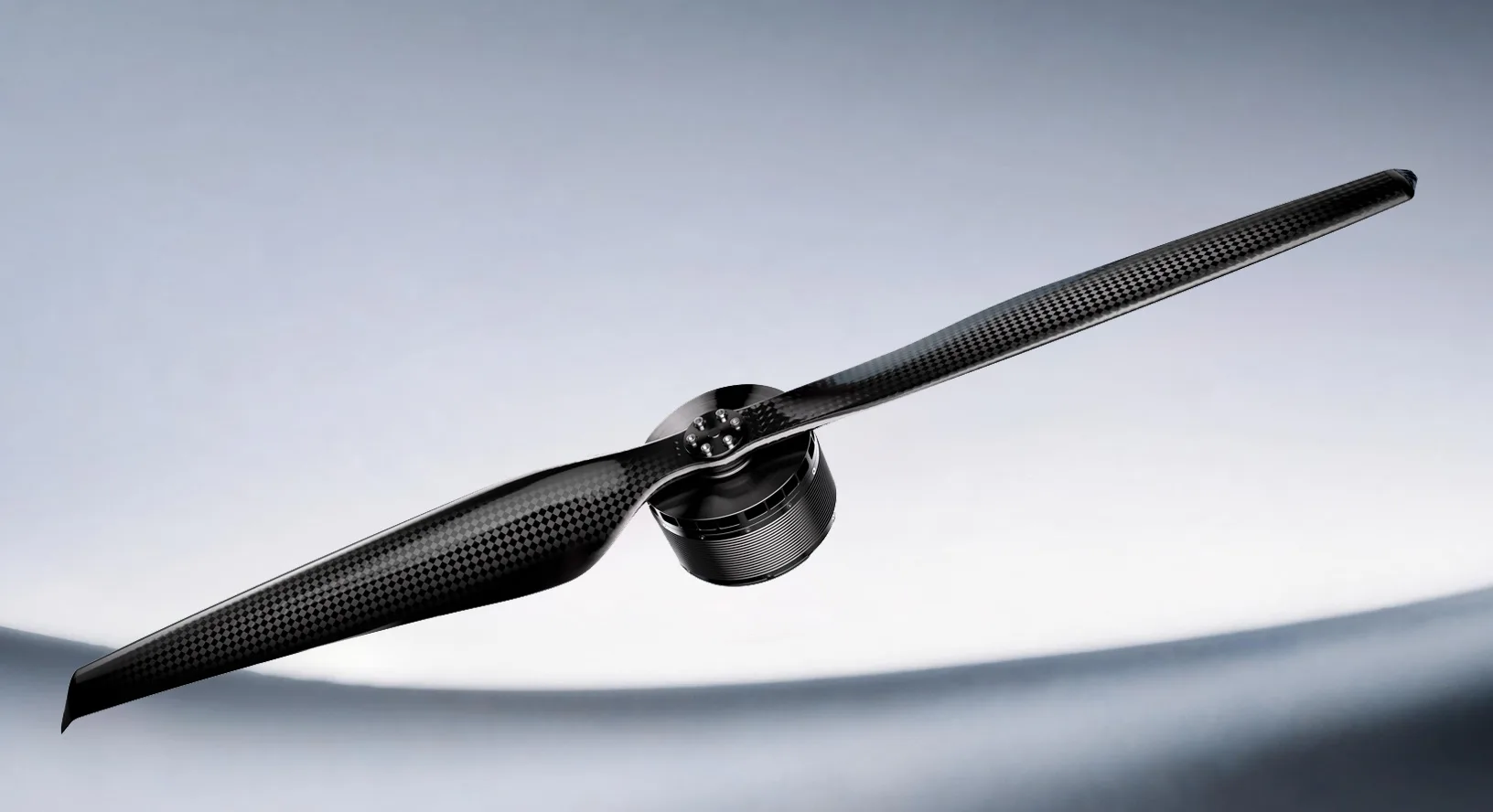
The propeller is the key component that converts motor torque into lift, directly determining the payload capacity and system efficiency, which are as important as that of the motor itself.
In general, larger propeller diameters push more air, enabling higher thrust at lower RPMs and improving efficiency. Furthermore, a higher pitch is better suited for higher flight speeds but will increase a greater load on the motor. Propeller material also dictates performance characteristics: carbon fiber or composite materials have the advantages of lightweight, good rigidity, and minimal vibration, while wooden or nylon-carbon composite propellers are known for their resistance to deformation.
When selecting a propeller, a comprehensive assessment must be conducted based shaft spacing, material, blade material, weight, and balance.
Large diameter + Low KV motor: Recommended for heavy-lift and long-endurance scenarios.
Small diameter + High KV motor: Recommended for high-speed and light-payload applications.
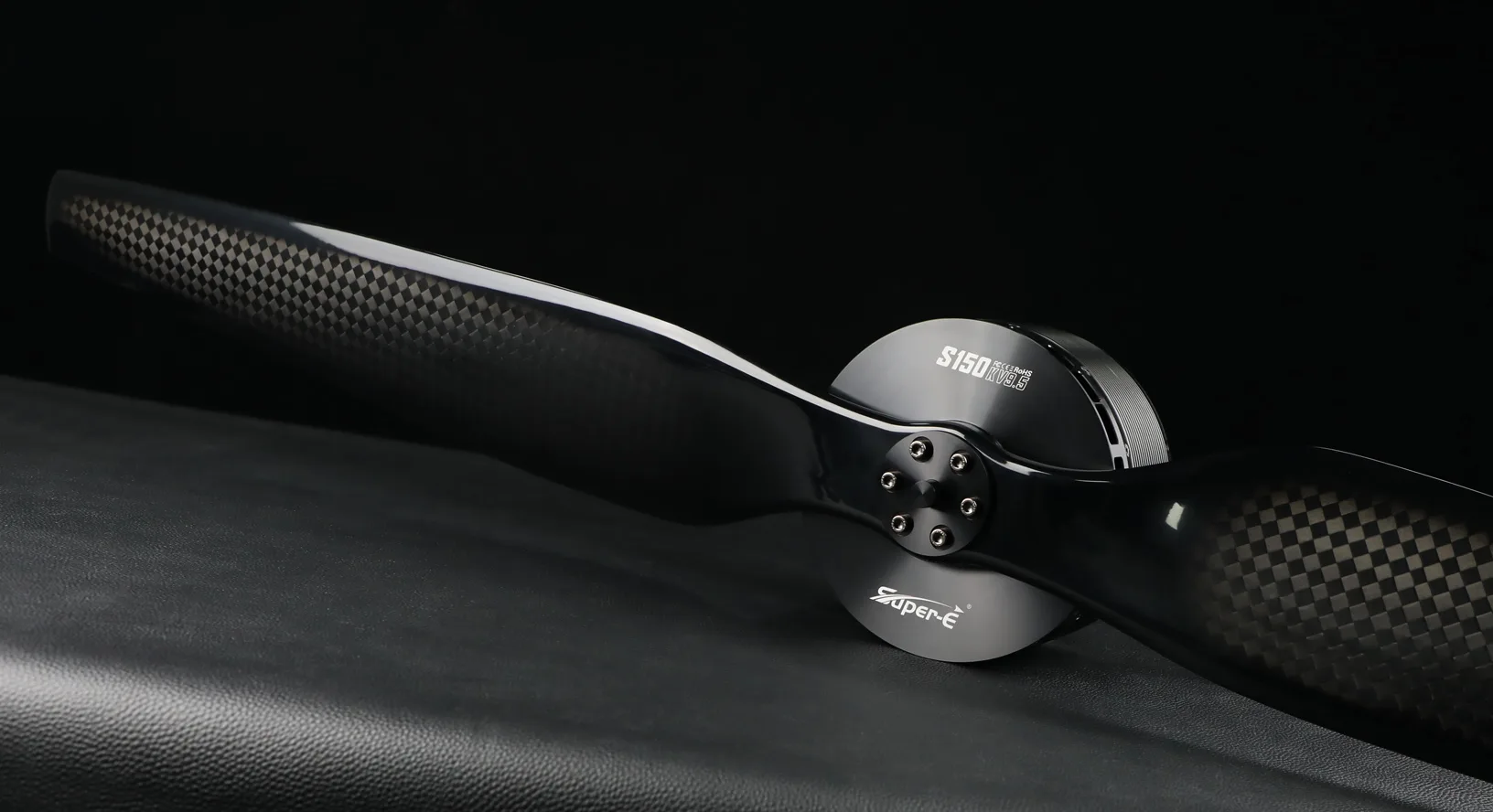
Carbon fiber propellers: Preferred for industrial-grade heavy-lift platforms due to superior rigidity.
Folding propellers: Enhanced for portability and deployment, though they require higher structural integrity and reliability
3.Efficiency
In the industry, efficiency is usually measured in g/W. For heavy-lift UAVs, efficiency directly impacts flight time, payload capacity, and overall energy consumption.
The efficiency of the power system is generally determined by the combined efficiency performance of the motor, propeller, ESC, and battery. However, in practical applications, 'high efficiency' does not necessarily mean maximizing the efficiency of a single component. Instead, it requires the optimal matching and synergy between all components under the target operating conditions.
Heavy-lift motors generate a lot of heat energy under high current—leading to increased power loss and higher overall temperatures. Therefore, it is highly recommended to select propulsion systems with centrifugal fans or open cooling designs to avoid efficiency loss due to thermal throttling.
For long- endurance heavy-duty UAVs, prioritize low-KV, high-torque motors paired with large-diameter propellers and high-voltage systems. This setup minimizes operating current and maximizes overall system efficiency.
4.Reliability
Heavy-lift UAVs are often used for high-value and high-risk missions. A failure of the propulsion system can lead to drone crashes, so the reliability of the power system is extremely critical.
The reliability of a drone is not only reflected in motor lifespan and stable thrust output, but also includes heat dissipation capability, IP rating (water/dust resistance), vibration resistance, and consistent performance during long-duration operation.
For instance, to prevent demagnetization or burnout from long-term full-load operation, the motor must feature a good heat dissipation design. The ESCs should support protection functions such as over-current, over-voltage, and over-temperature. Furthermore, the power system must have capabilities of waterproof and dustproof, to cope with harsh environments such as rain and sandstorms. In addition, the system should require higher durability for core components such as bearings, magnets, and windings.
When selecting components, continuous airworthiness requirements must be considered along with regular inspections and calibrations. For heavy-lift UAVs, reliability is often more important than peak thrust.
Selection Suggestions
1.Define requirements
Flight Platform Category: Multi-rotor, Fixed-wing, or VTOL.
Maximum Takeoff Weight: MTOW = Empty Weight + Payload
Rated Thrust Per Axis: A certain amount of thrust redundancy should be considered to handle unexpected situations
2.Propeller Selection
Select appropriate propeller sizes based on the specific application scenario of the flight platform.
Balance propeller dimensions with transportation constraints. If the transport vehicle imposes restrictions on blade size, foldable propellers or downsized propellers may be considered. However, this may reduce overall system efficiency.
Heavy-Lift UAV Propulsion Solutions
T-MOTOR provides a range of high-performance propulsion systems for heavy-lift applications, covering multirotor, VTOL, and eVTOL platforms. Each series integrates advanced technology and optimized design to ensure stable, efficient, and long-life power support in various heavy-duty missions, meeting the diverse needs of different flight platforms.
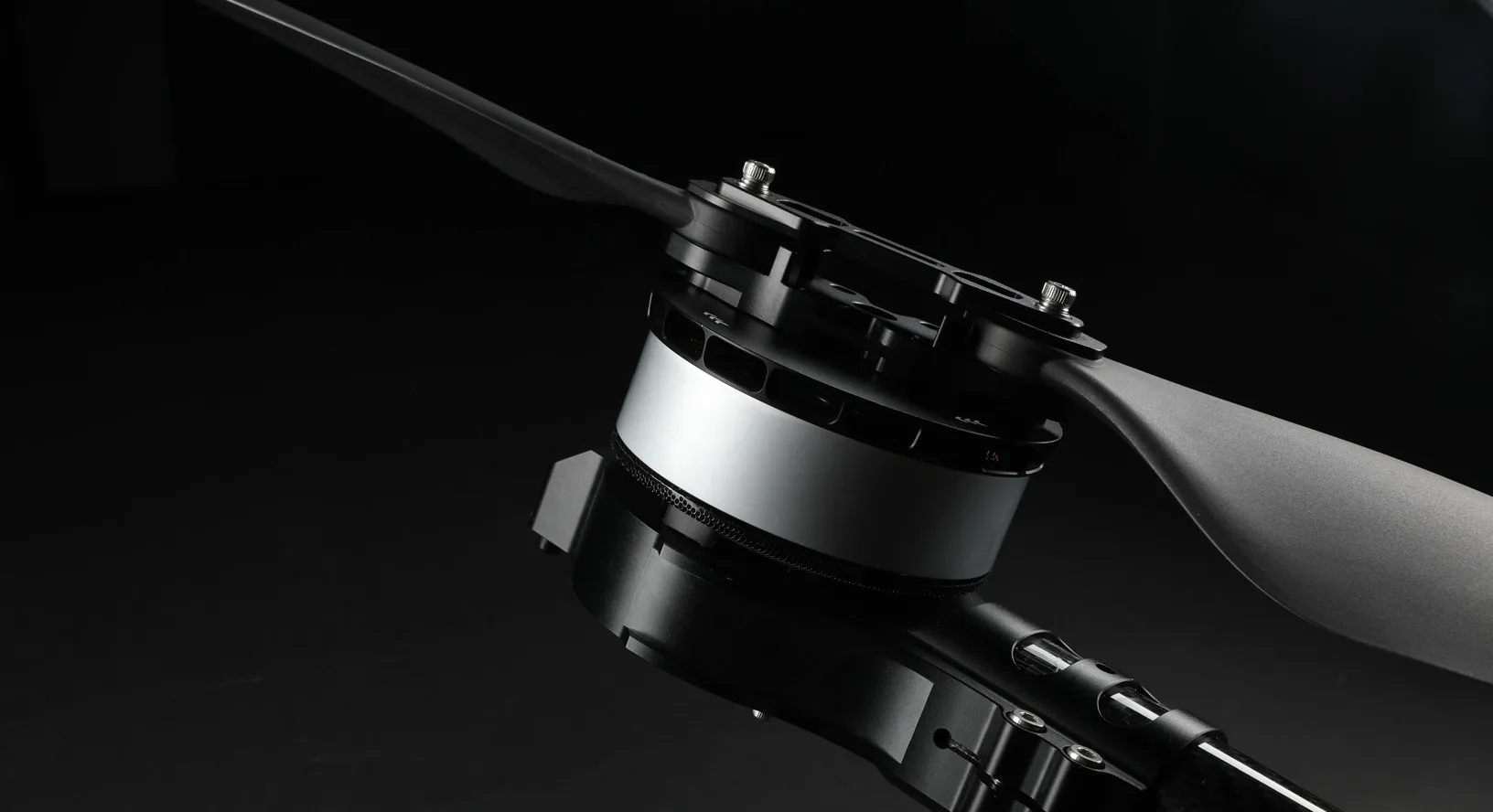
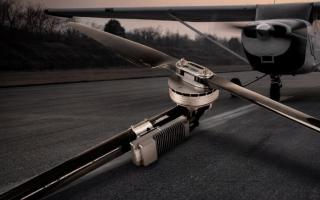
1.A Series - Multirotor Coaxial Modular Power System
The selection of propulsion systems for heavy-lift UAVs is not simply about stacking parameters. It requires comprehensive consideration of multiple factors, including platform type, thrust requirements, propeller geometry, efficiency, and reliability. Different platforms have significantly different requirements: multirotor platforms place more emphasis on thrust and redundancy; fixed-wing platforms focus on cruise efficiency and endurance; VTOL platforms need to balance vertical lift performance with long-range cruise performance.
An optimized system can not only enhance thrust and endurance but also reduce energy consumption, failure rates, and improve overall stability. For industrial-grade drone projects, prioritizing safety redundancy and reliability is often more important than simply pursuing peak performance.
FAQ
1.Low-KV + Large Propeller vs. High-KV + Small Propeller
Low-KV + Large Propellers:
Advantages: Higher efficiency (moves more air, lower current draw for the same thrust); higher torque; excellent for heavy payloads and stable hovering; lower power consumption; longer flight time (better endurance).
Disadvantages: Slower response; slightly reduced agility; higher propeller cost; more susceptible to wind resistance.
High-KV + Small Propellers:
Advantages: Fast response and quick acceleration; better suited for scenarios requiring quick maneuvers and high-speed flight.
Disadvantages: Lower overall efficiency due to high RPM, more heat generation; prone to overloading under heavy-lift conditions; shorter endurance.
2.Why Octo-rotors (or X8 Coaxial) are Preferred Over Quad-rotors (non-coaxial) for Heavy-lift UAVs?
For heavy-lift UAVs, Octo-rotors (8-axis) or X8 Coaxial configuration is generally recommended over a standard quadcopter (non-coaxial).
Compared to a quadcopter, the octocopter provides higher safety and power redundancy. If one power unit fails, a quadcopter may lose control and crash, whereas an octocopter can use its control algorithms to maintain stability and ensure a safe emergency landing.
Heavy-lift tasks demand extreme total thrust. Using an octocopter ensures a more balanced load distribution across each propulsion unit, while retaining ample thrust margins for maneuverability and wind resistance.
It delivers better stability and disturbance rejection. More rotors result in smoother hovering, more uniform downwash airflow, and stronger wind resistance, making it the ideal choice for complex environments and precision payload operations.
3.Why do heavy-lift drones recommend high-voltage platforms? Why not choose low-voltage systems?
The choice between high-voltage and low-voltage platforms for heavy-lift drones should be based on the Maximum Takeoff Weight (MTOW).
MTOW ≥ 500kg: High-voltage platforms (400V+) are highly recommended.
MTOW ≤ 500kg: Low-voltage platforms are generally recommended.
Heavy-lift drones benefit significantly from high-voltage platforms because they can greatly reduce operating current.
This optimization enhances overall system efficiency and extends flight endurance. When paired with low-KV motors and large-diameter propellers, the high-voltage architecture achieves superior energy economy within the 50-70% throttle range.