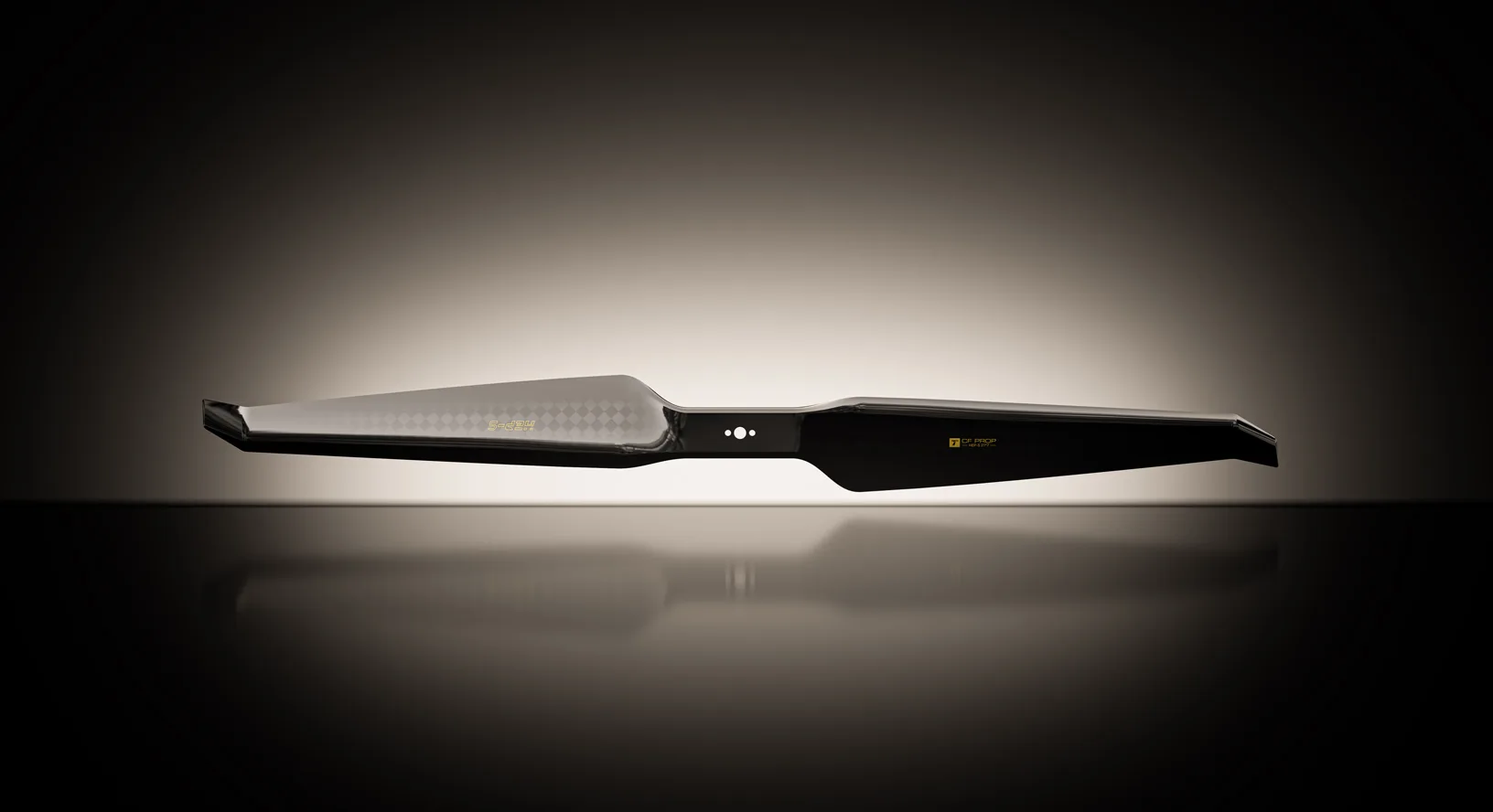
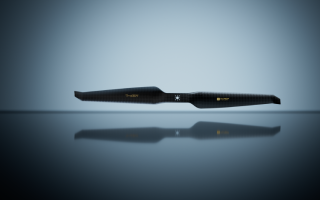
T-MOTOR HEP-S Series Heavy-Duty UAV Propellers for Industrial Drone Applications
Published March:2026-07-27 · Updated:2026-07-28 · Elio
In industrial UAV operations using heavy lift drone propellers such as mountain material lifting, field transportation, and emergency rescue, industrial UAV systems often require high-performance drone propellers to operate continuously under high loads, complex weather conditions, and harsh terrains, placing unprecedented strain on the propellers.
Why launch the HEP-S series propellers?
Currently, some existing UAV propellers in the industrial drone market exhibit the following pain points under heavy-lift UAV operating conditions:
Significant elastic deflection and deformation of the blades under high-thrust conditions, which alters the aerodynamic shape and affects thrust efficiency and UAV propulsion system dynamic balance.
Low aerodynamic efficiency, which restricts flight time and operational range.
Uneven mass distribution, which impacts dynamic balance and flight quality in carbon fiber UAV propeller structures.
Facing the higher requirements posed by such complex missions for propeller structural strength redundancy, aerodynamic efficiency, and lightweight structural design, T-MOTOR has leveraged years of experience in industrial drone power system R&D to launch the HEP-S series high-performance heavy-duty carbon fiber propellers, designed specifically to solve these challenges.
What is the HEP-S Series Propeller?
The HEP-S series is a comprehensive upgrade of the classic G-series industrial UAV propellers designed for drone propulsion systems. Through high-strength carbon fiber structural optimization, enhanced aerodynamic performance, and deep synergy with the drone propulsion system, the UAV propellers achieve higher load-bearing capacity, faster control response, and superior endurance.
→ Explore the HEP-S series UAV propellers to learn more about industrial drone propulsion system solutions.
Why Choose the HEP-S Series Propellers?
Structural Strength Upgraded by 25% for More Reliable Heavy Lifting
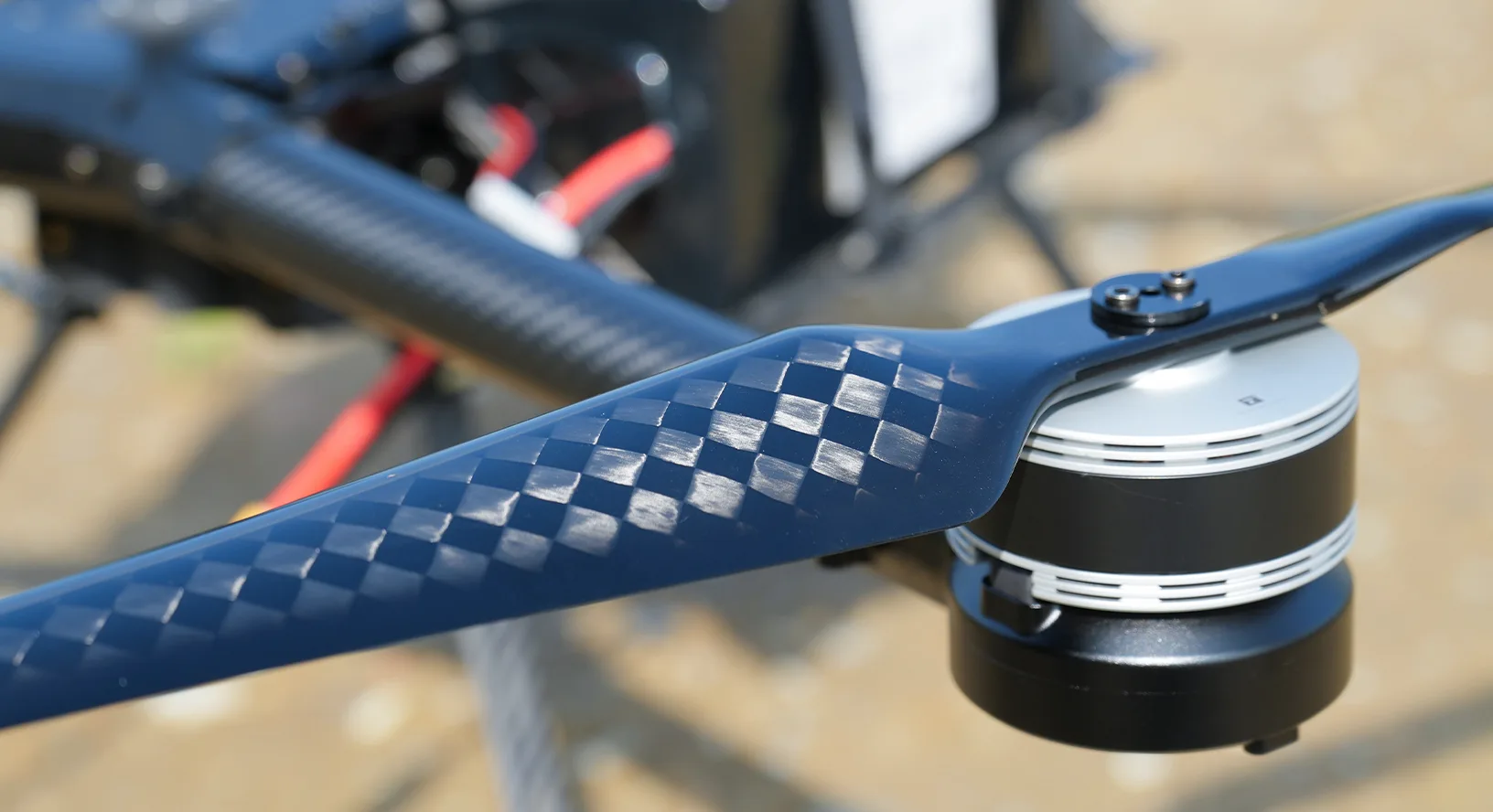
In industrial heavy lift UAV missions, the structural integrity of UAV propellers directly impacts mission safety and the reliability of the drone propulsion system. The HEP-S series UAV propellers comprehensively optimize the layup structure and use T1100-grade carbon fiber for reinforcement in key stress areas. Under T-MOTOR laboratory testing conditions, the overall structural strength of the blade is increased by 25% compared to the G series, effectively reducing elastic deflection and deformation under high-load conditions and maintaining a stable aerodynamic shape. This helps ensure the mission stability of drones in complex environments like mountain lifting and field transportation.
(Note: The above data is derived from T-MOTOR laboratory tests; actual performance may vary slightly depending on the operating environment.)
PMI Sandwich Carbon Fiber Composite Material for Both Lightness and Strength
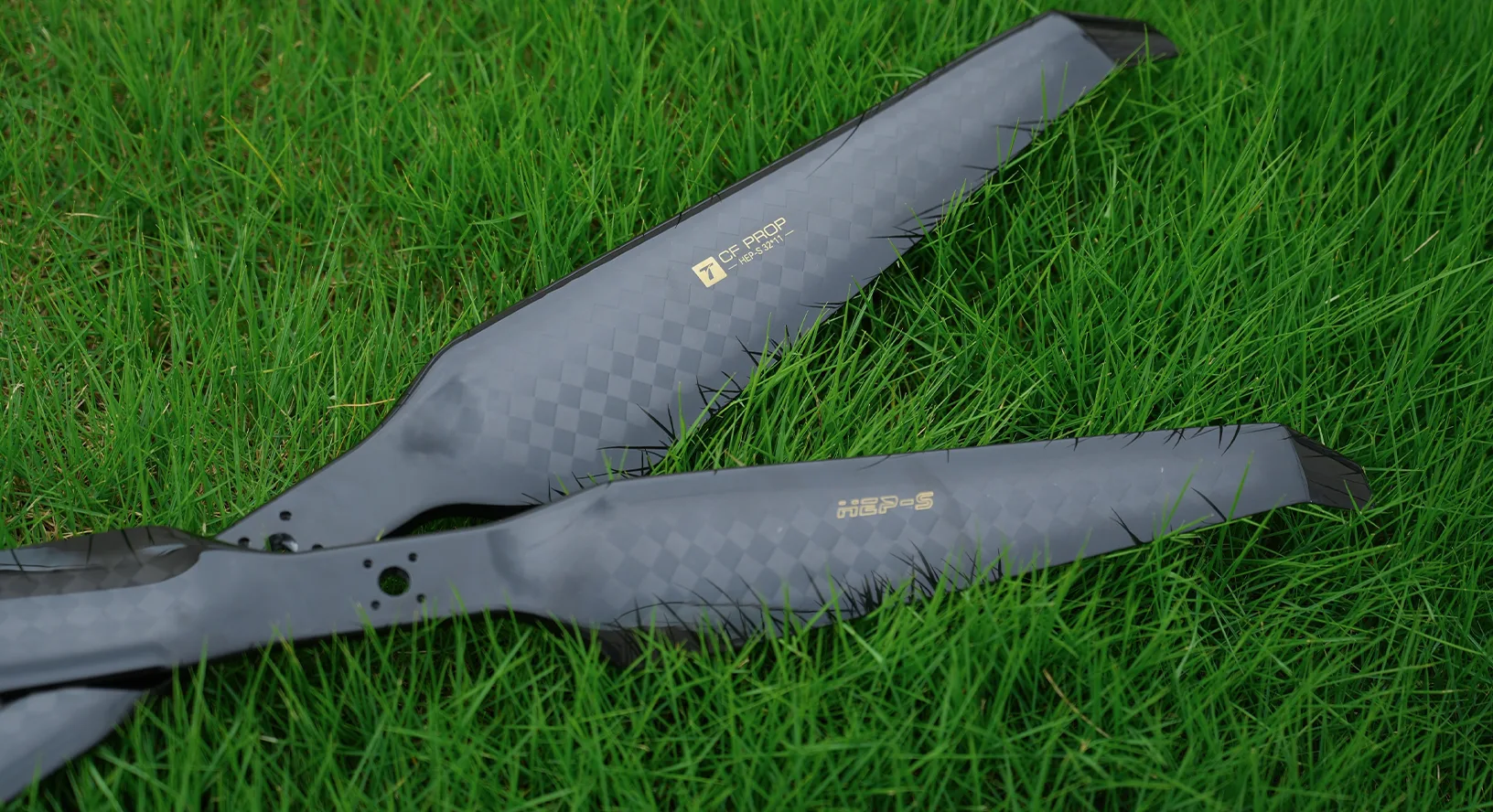
To achieve a balance between UAV propeller structural strength and lightweight design improves drone propulsion system efficiency, the HEP-S series UAV propellers utilize a resin-based carbon fiber composite material with a PMI sandwich structure.
The inner core uses polymethacrylimide (PMI) foam material, which possesses excellent specific strength and specific stiffness, ensuring dimensional accuracy and molding consistency through CNC precision machining.
The lightweight drone propulsion efficiency design optimizes the blade's center of gravity and mass distribution, reducing rotational inertia and enhancing thrust response speed and flight control sensitivity.
The lightweight structure helps reduce structural dead weight, providing the drone with faster thrust adjustment capabilities and smoother flight transitions.
Refined Aerodynamic Design, Expected to Extend Flight Time by Approximately 3%
The HEP-S series UAV propellers feature refined aerodynamic optimization of airfoil, chord length, and twist angle distribution for improved drone propulsion system efficiency. Under T-MOTOR standard testing conditions (under identical power configuration and environmental conditions), the rotor's aerodynamic efficiency is significantly improved, resulting in an approximate 3% increase in flight time compared to the G series. This improvement helps reduce energy consumption per operation, decreasing charging frequency and operational intervals for the same workload, thereby enhancing overall operational economy.
(Note: The actual flight time increase is affected by factors such as the flight environment, airframe structure, and battery capacity; the 3% figure is a test result under ideal laboratory conditions. )
Synergistic Power System Design for Superior Thrust Efficiency
The HEP-S series UAV propellers are not only compatible with various motors but also deeply synergized with the T-MOTOR drone propulsion system. The aerodynamic characteristics of the blades and the torque output characteristics of the motors are matched and optimized, allowing the power system to maintain a high efficiency level across a wide RPM range, helping users fully unlock the power system's potential.
Full Lifecycle Traceability and Transport Protection
To accommodate product traceability management and brand display needs, the HEP-S series features an integrally molded QR code to achieve product origin tracing and full lifecycle tracking management. Additionally, the products come with dedicated protective propeller bags, which effectively reduce the risk of collision during transport and protect the blades from external damage.
HEP-S Series Specifications
To meet the multidimensional operational needs of different users from light to heavy loads, the initial release of the HEP-S series offers a rich selection of models. The following parameters are for reference only; selections can be made based on specific working conditions in actual applications.
The HEP-S series deeply synergizes with T-MOTOR power-type motors; precise pairing can better maximize blade performance. The following are recommended configurations; users can adjust them according to actual needs.
→ Contact T-MOTOR for professional UAV propeller selection support
FAQ
What are the main upgrades of the HEP-S industrial UAV propellers compared to the G-series UAV propellers?
Powered by T1100 carbon fiber, the HEP-S series increases strength by ~25%, extends flight time by ~3% (T-MOTOR lab tested), and sharpens dynamic response via aerodynamic lightweight design.
What is the prepreg process? What are its advantages compared to traditional processes?
The prepreg process precisely controls the fiber-to-resin ratio, improving material consistency and layup precision for more consistent propeller performance and optimized dynamic balance.
What are the technical advantages of the PMI sandwich structure?
The PMI sandwich structure delivers high specific strength and stiffness to cut weight while enhancing blade rigidity, paired with CNC precision machining for exceptional dimensional consistency.