Industrial Drone ESC Communication Protocols Explained: PWM vs DRONE CAN Selection Guide
Published March:2026-07-30 · Updated:2026-07-31 · Elio
Table of Contents
Share This Article
PWM and Drone CAN are two widely used communication protocols for industrial UAV ESCs. PWM ESCs provide a simple and cost-effective solution for lightweight UAV platforms, while Drone CAN ESCs enable bidirectional communication, real-time telemetry, and strong EMI resistance for heavy lift and industrial drones.
This guide compares both protocols to help engineers and UAV integrators select the right ESC communication solution.
Why Are ESC Communication Protocols Critical for Industrial UAVs?
In industrial UAV systems, the ESC acts as the key link between the flight controller and propulsion system, controlling motor output while providing essential monitoring and protection functions. As industrial drones operate in more demanding environments, ESC communication protocols directly affect control reliability, EMI resistance, real-time data telemetry, and overall system stability. Selecting the right communication protocol is therefore critical for heavy lift UAVs and mission-critical applications.
Comprehensive Analysis of the PWM Protocol
What is the PWM Protocol?
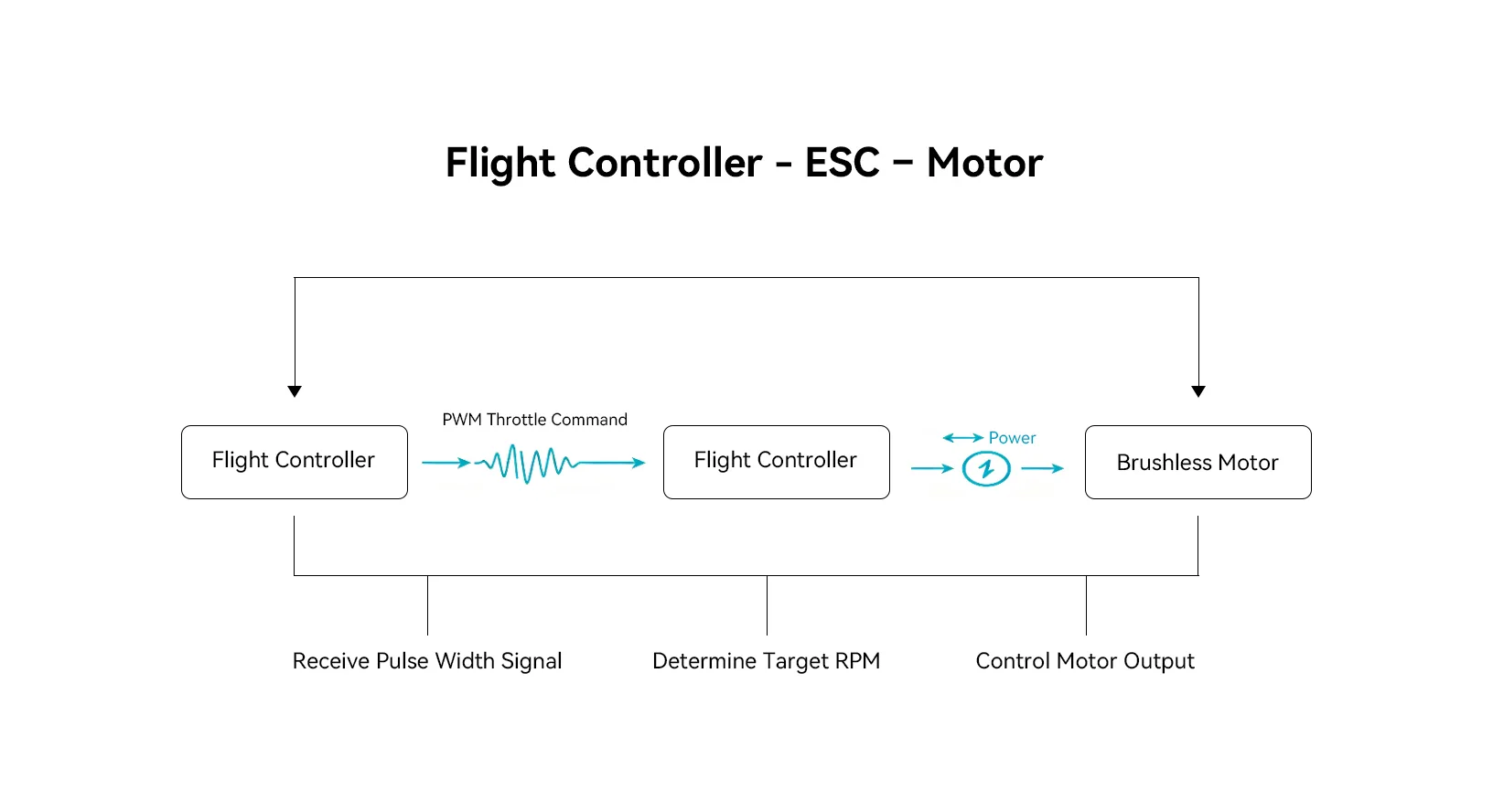
Pulse Width Modulation (PWM) is a communication method that controls ESC output by adjusting pulse width signals. In UAV ESC systems, the flight controller sends RPM commands to the ESC through PWM signals, allowing the ESC to regulate motor speed and propulsion output.
How Does PWM Work?
The PWM protocol controls ESC output by adjusting pulse width and duty cycle. In drone propulsion systems, PWM signals transmit commands from the flight controller to the ESC, which regulates motor speed based on the received signal.
Key Parameter
Function
Frequency
Determines the signal refresh rate
Duty Cycle
Controls the ESC output command
Resolution
Affects adjustment precision
What Are the Applications of the PWM Protocol?
PWM typically uses unidirectional point-to-point communication, requiring each ESC to connect directly to a dedicated signal channel from the flight controller.
Application
Operational Mode
Motor Control
Adjusts PWM signals to control RPM
Propulsion Control
Executes basic ESC commands
Simple UAV Systems
Meets low-cost control requirements
Advantages and Limitations of PWM ESCs
Due to its straightforward architecture and high compatibility, PWM effectively meets basic propulsion control demands for small UAV systems executing simple missions in stable flight environments.
PWM Protocol Advantages:
Low Latency: Provides fast response for basic motor control requirements.
Precision: Accurately adjusts the amplitude and frequency of the output signals.
Cost-Effectiveness: Simple hardware design enables easy integration and lower system costs.
Compatibility: Widely supported by various UAV platforms.
PWM Protocol Limitations:
EMI Resistance: Provides weaker protection against electromagnetic interference compared with differential communication protocols.
Limited Monitoring: One-way communication prevents real-time telemetry and ESC status feedback.
Interference Resistance: Exhibits weaker resilience against external Electromagnetic Interference (EMI).
Scalability: Requires individual signal connections for multiple ESCs, increasing wiring complexity in large UAV systems.
In-Depth Analysis of the Drone CAN ESC Protocol
What is the Drone CAN ESC Protocol?
Drone CAN ESC (formerly UAVCAN) is a bidirectional communication protocol based on the CAN bus architecture. It enables closed-loop control and real-time data telemetry for industrial UAV propulsion systems.
How Does the Drone CAN ESC Protocol Work?
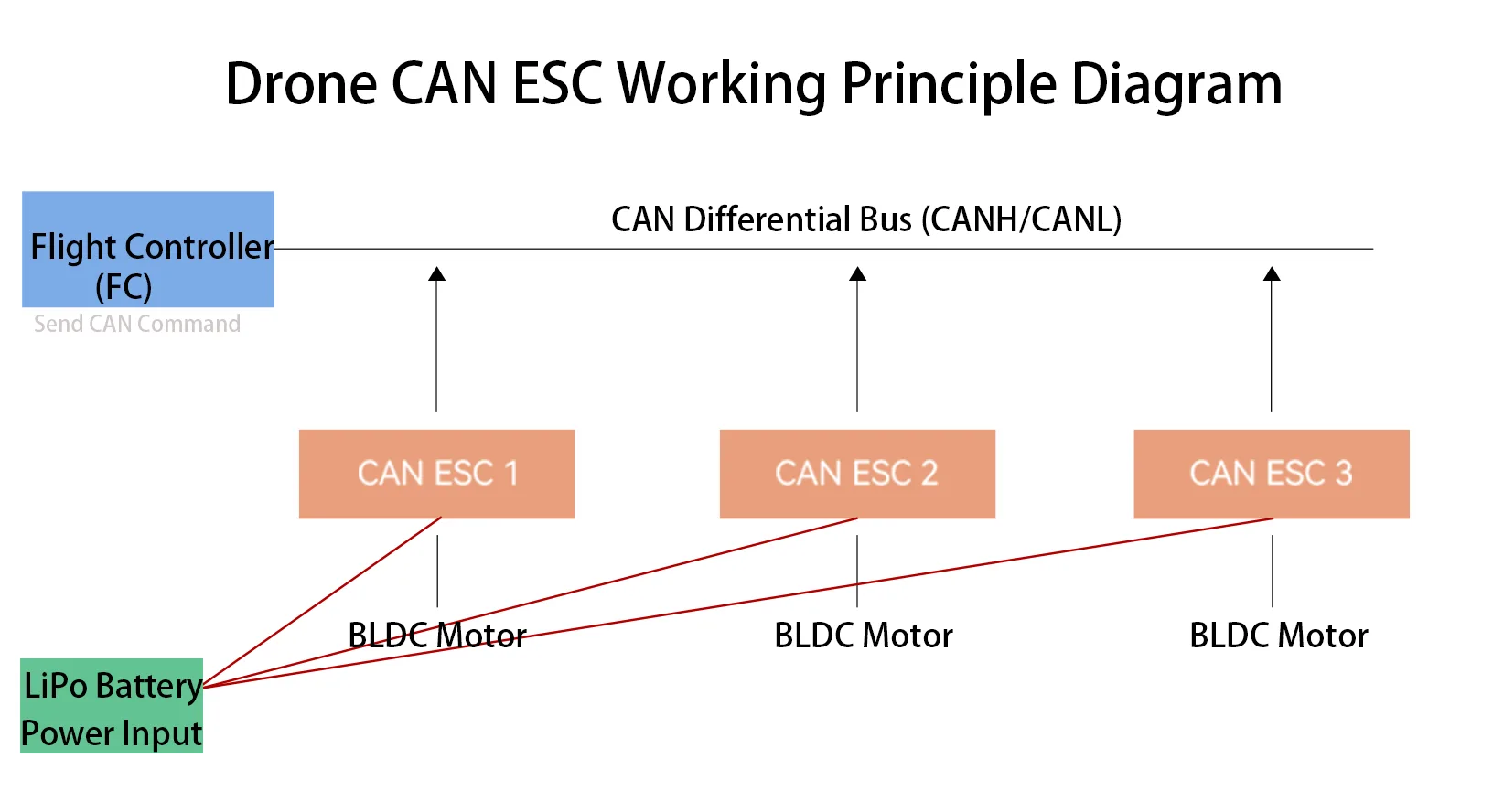
Drone CAN uses a bus-based communication architecture that allows multiple ESCs and devices to share a single connection. Through differential communication, Drone CAN ESCs provide reliable bidirectional data transmission for industrial UAV propulsion systems.
What Are the Applications of the Drone CAN Protocol?
Drone CAN ESCs use a multi-node bus architecture, allowing multiple ESCs to share a single communication link. A flight controller can manage multiple UAV ESCs through one CAN interface, simplifying system integration and improving scalability.
Application
Operational Mode
Propulsion Control
Bidirectional transmission of RPM commands and operational data
Status Monitoring
Telemetry feedback for voltage, current, and temperature
Fault Diagnosis
Supports anomaly detection and system alerts
Multi-Device Communication
Connects multiple nodes via a single CAN bus
Advantages and Limitations of Drone CAN ESCs
For industrial-grade and heavy lift UAV systems operating in harsh environments, the characteristics of the Drone CAN protocol perfectly align with stringent reliability standards.
Drone CAN Advantages:
Real-Time Telemetry: Provides continuous feedback on propulsion system status, including key operating data.
EMI Resistance: Differential communication provides strong resistance against electromagnetic interference (EMI).
Scalability: The bus architecture supports multiple devices through a single communication network.
Intelligent Diagnostics: Enables fault detection through real-time data analysis.
Drone CAN Limitations:
Cost: Requires additional communication hardware, increasing system complexity and cost.
Integration Complexity: Requires flight controller support and additional configuration, increasing development requirements.
Selecting the optimal ESC communication protocol requires evaluating the drone type, mission profile, reliability requirements, and propulsion system architecture.
Selection by UAV Type
UAV Type
Propulsion Features
Recommended ESC
Small Multirotors
Low payload, simple build
PWM
Industrial Multirotors
Multi-motor, high payload
DRONE CAN
Heavy Lift UAVs
High reliability & safety
DRONE CAN
Fixed-Wing UAVs
Long endurance
PWM/DRONE CAN
VTOL Drones
Hybrid propulsion
DRONE CAN
Selection by Mission Profile
Mission Profile
Core Requirement
Recommended ESC
Real-Time Control
Fast RPM response
DRONE CAN
Extended Operation
Stable link, low risk
DRONE CAN
High Reliability
Telemetry & diagnostics
DRONE CAN
Motor Coordination
Multi-node networking
DRONE CAN
Cost-Sensitive
Basic control
PWM
Live Telemetry
V/A/Temp monitoring
DRONE CAN
Automated O&M
Data logging & health
DRONE CAN
Selection by Propulsion System Architecture
Architecture
Features
UAV Types
Rec. ESC
Rationale
Single ESC
Simple setup
Small & entry-level drones
PWM
Basic FC commands only.
Multi-ESC Bus
Multi-node
Medium-to-large & heavy lift UAVs
DRONE CAN
Sync communication with error detection.
Smart Propulsion
Closed-loop
Long endurance, automated platforms, swarms
DRONE CAN
High bandwidth data transfer.
Comprehensive Selection
Scenario
ESC
Rationale
Small UAV
PWM
Low cost, simple
Industrial Multirotor
DRONE CAN
Reliable, supports telemetry
Heavy Lift Delivery
DRONE CAN
High reliability & bandwidth
Long Endurance
DRONE CAN
Ideal for continuous use
Smart Platform
DRONE CAN
System-level data management
Cost-Sensitive
PWM
Meets basic control needs
→ Unsure whether PWM or Drone CAN fits your UAV? Contact T-MOTOR engineers for a consultation.
Industrial UAV ESC Recommendations
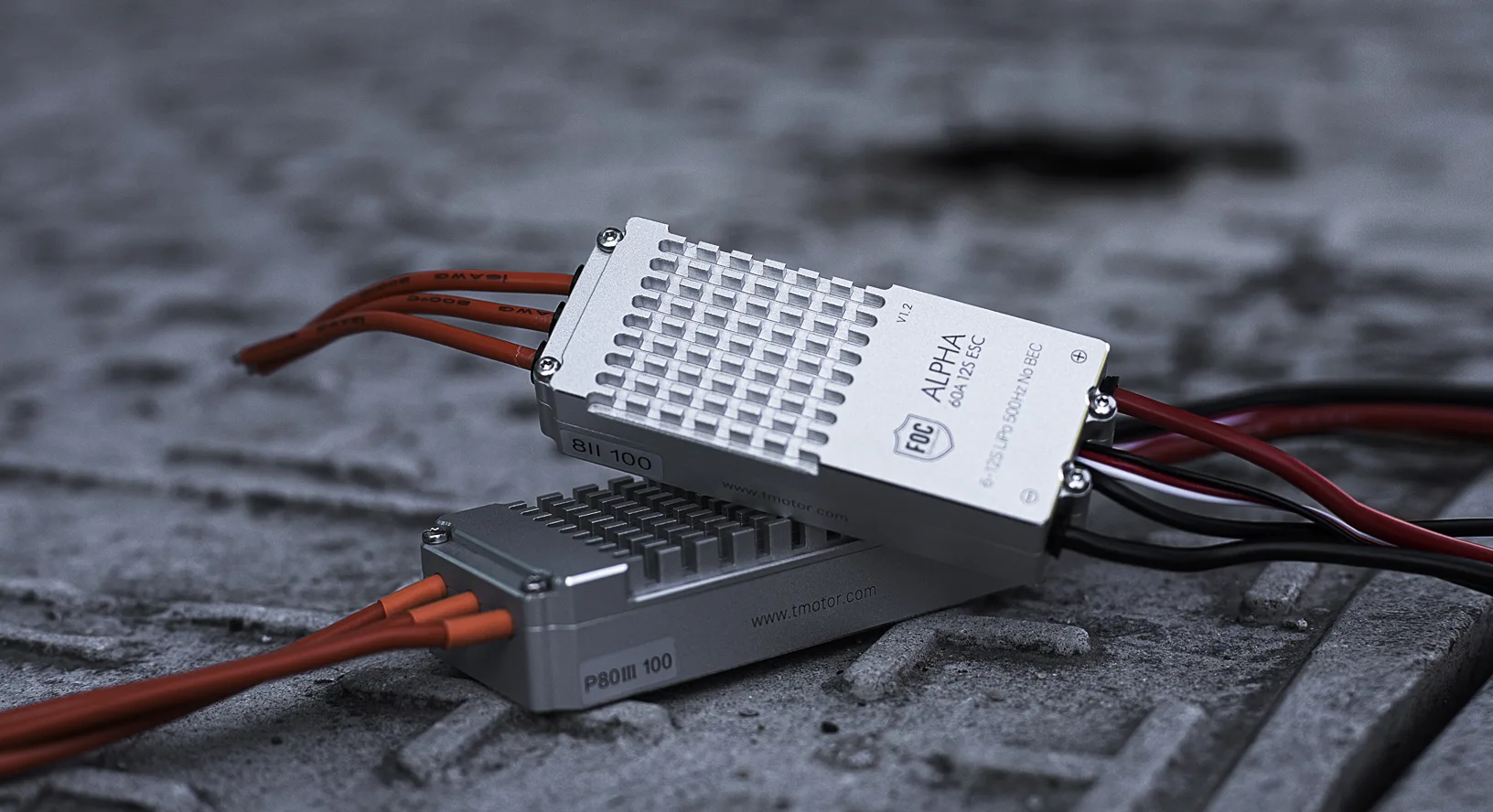
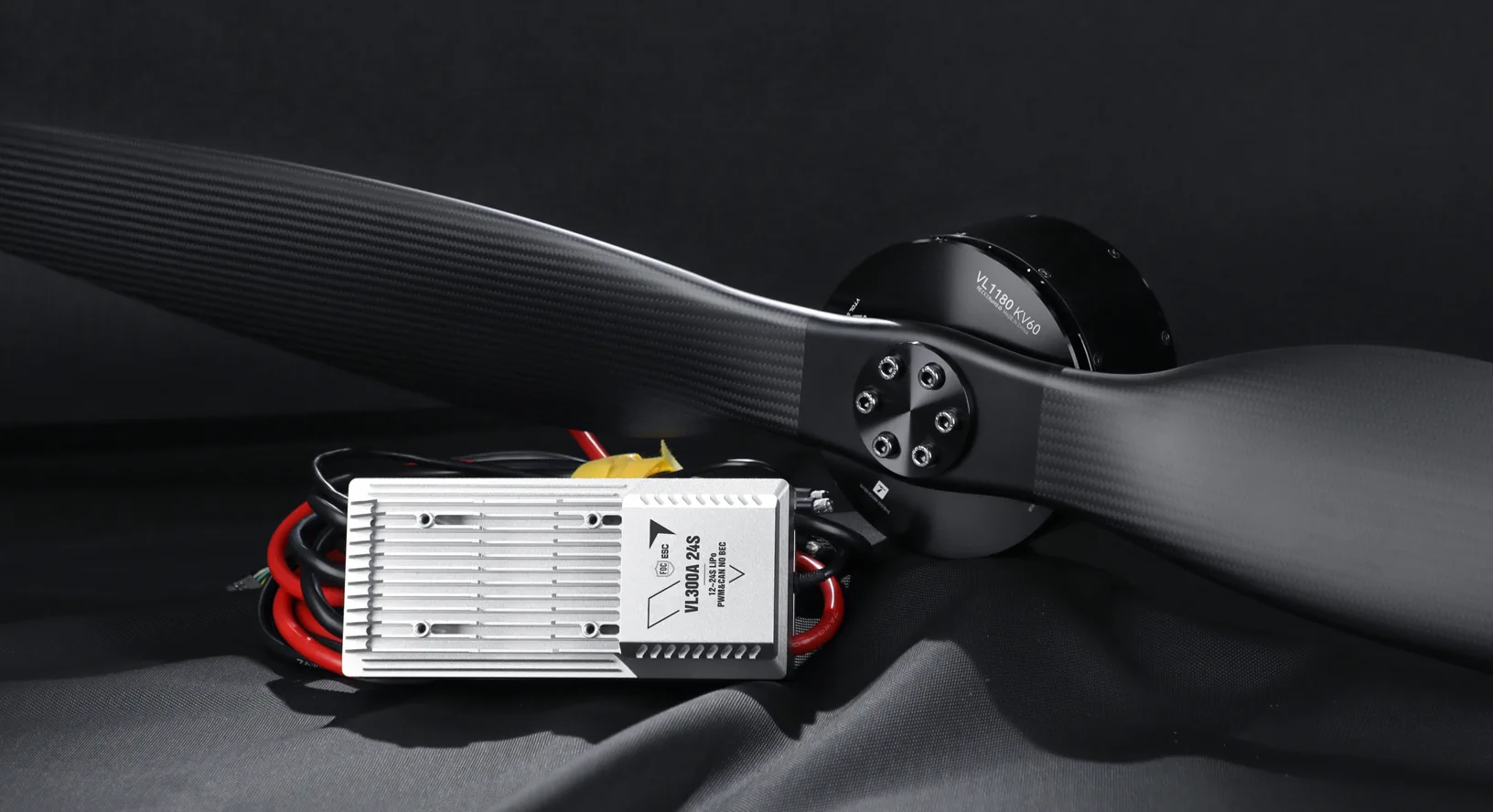
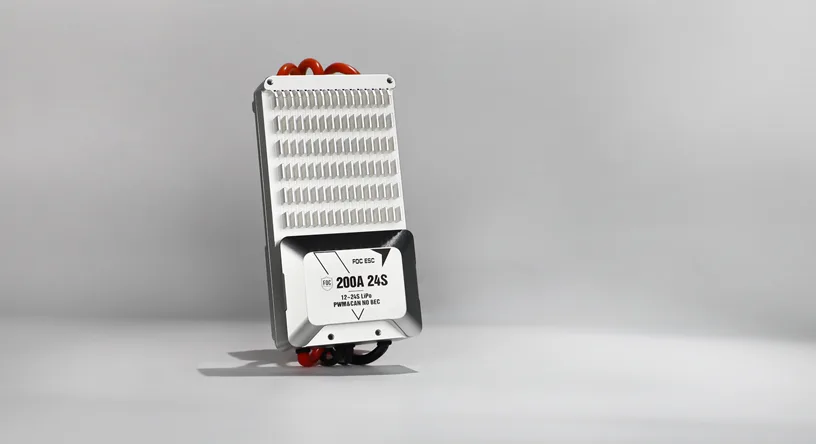
To meet the diverse requirements of industrial UAV applications, T-MOTOR provides comprehensive UAV ESC solutions covering both PWM and Drone CAN communication protocols.
Selecting the right ESC communication protocol requires evaluating the UAV type, mission requirements, and propulsion architecture. PWM ESCs are suitable for lightweight and cost-sensitive UAV platforms, while Drone CAN ESCs, with bidirectional communication, real-time telemetry, and strong EMI resistance, are preferred for medium-to-large industrial drones, heavy lift UAVs, and mission-critical applications.
T-MOTOR provides integrated UAV propulsion solutions, including drone motors, ESCs, and propellers. Validated through vibration, temperature, and water resistance testing, T-MOTOR ESC solutions deliver reliable performance in demanding flight environments.
FAQ
Q1: What is the primary difference between PWM and Drone CAN ESCs?
PWM provides straightforward, unidirectional control, whereas Drone CAN supports bidirectional communication and real-time health telemetry.
Q2: Is Drone CAN better than PWM for industrial drones?
Yes. For heavy lift UAVs and industrial drone platforms, Drone CAN offers superior reliability due to its advanced data feedback capabilities and robust electromagnetic interference (EMI) resistance.
Q3: Can Drone CAN ESCs completely replace PWM ESCs?
Not necessarily. PWM remains highly suitable for cost-sensitive and structurally simple UAV applications where advanced telemetry is not required.
Q4: Does T-MOTOR offer Drone CAN ESCs?
Yes. T-MOTOR ESCs provide both Drone CAN and PWM communication options to seamlessly integrate with a wide range of industrial UAV propulsion systems.