Agricultural Drone Flight Time: How to Reduce Energy Consumption
Published March:2026-09-18 · Elio
Table of Contents
Share This Article
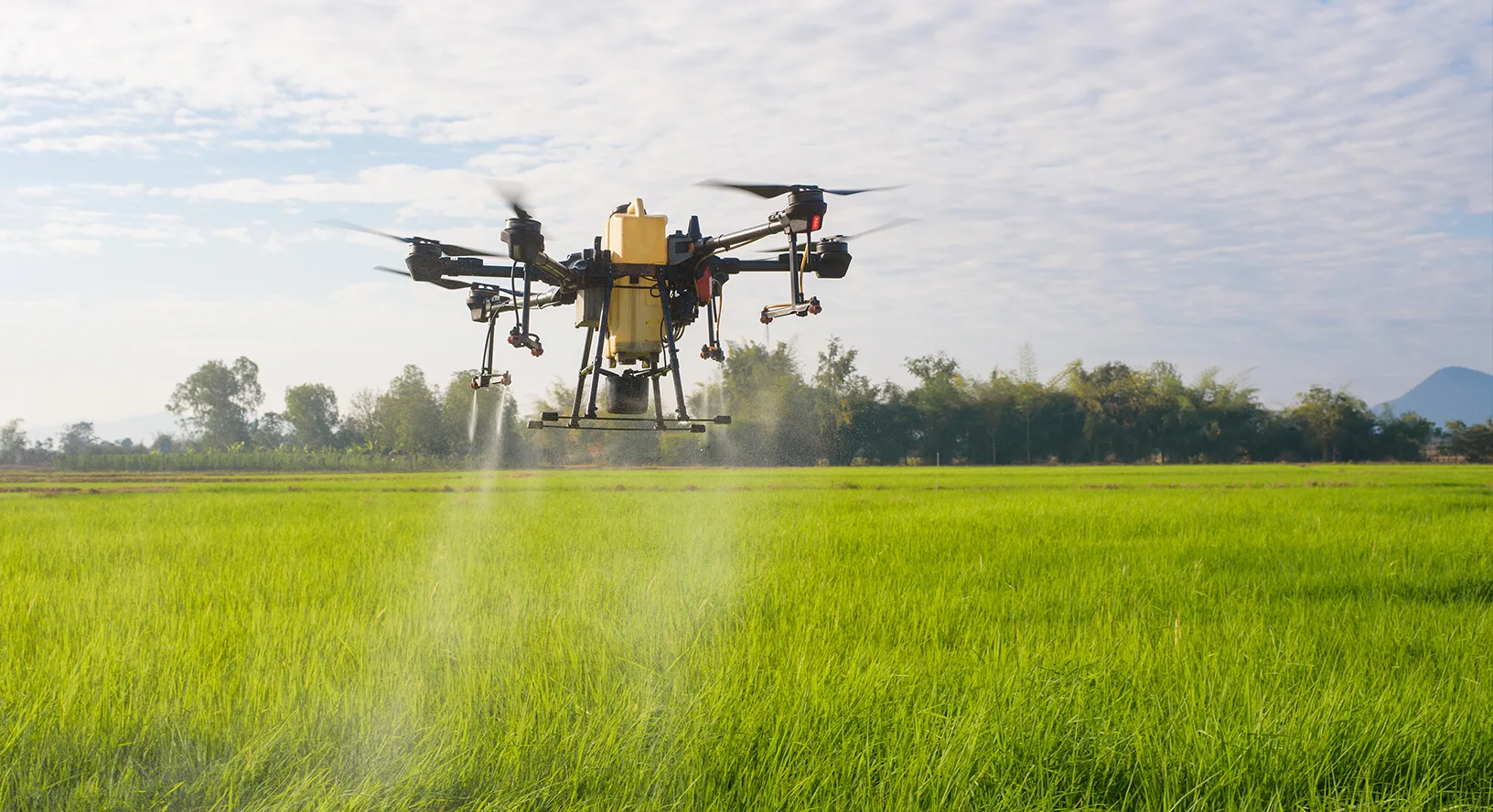
Flight time directly affects the efficiency and operating costs of agricultural drones. Heavy payloads, long hovering, low-speed flight, and frequent turns require sustained thrust from the propulsion system.
Limited flight time is not always caused by insufficient battery capacity. Adding larger batteries can also increase weight and power consumption.
Extending actual flight time requires reducing unnecessary energy consumption through optimized weight, propellers, motors, ESCs, batteries, and system voltage.
Why Do Agricultural Drones Have Limited Flight Time?
Agricultural drone energy consumption is closely related to payload and operating conditions. Liquid or other payloads increase takeoff weight, while hovering, low-speed flight, and frequent turns require sustained thrust.
As takeoff weight increases, thrust and power requirements also increase. Adding battery capacity may further increase propulsion load due to the added battery weight.
Therefore, extending flight time requires reducing overall energy consumption rather than simply increasing battery capacity.
Reduce Weight: Start with MTOW and Payload
Weight is a key factor in agricultural drone energy consumption. The propulsion system must generate enough thrust to support both the UAV and its payload.
MTOW = Empty Weight + Payload
Empty Weight is the UAV's own weight, while Payload includes liquid, granular, or other mission loads. For crop protection drones, liquid consumption changes the aircraft weight and thrust requirements throughout the flight.
Reducing unnecessary airframe and battery weight, while controlling payload, can lower propulsion energy consumption. Weight optimization requires balancing the airframe, battery, propulsion system, and payload.
Optimize Propellers: Reduce the Power Required for Thrust
Propellers convert motor output into thrust, so propeller efficiency directly affects the power required for target thrust. For agricultural drones with extended hovering or low-speed flight, higher propeller efficiency can reduce energy consumption.
Propeller diameter, pitch, RPM, and aerodynamic design affect power demand. Larger-diameter propellers at lower RPM can generally reduce hover power losses, but larger propellers are not always more efficient. Motor torque, operating voltage, and overall propulsion matching must also be considered.
Motor KV, battery voltage, propeller diameter, and pitch should be matched as a system. T-MOTOR evaluates propulsion efficiency using thrust, power, and g/W.
For example:
The A12-24Suses a KV50 motor, 24S FOC ESC, and MF4114P propeller, delivering a nominal overall efficiency of 8.2 g/W at 25 kg rated thrust.
The A14-24S uses a KV37 motor, 24S FOC ESC, and MF5620P propeller, delivering a nominal overall efficiency of 9.5 g/W at 25 kg rated thrust.
These results show that propeller optimization should consider the complete motor, ESC, and propeller system—not propeller size alone.
Optimize Motors: Improve Efficiency Under Actual Loads
For agricultural drone flight-time optimization, motor efficiency should be evaluated under actual operating loads, not maximum thrust alone.
Thrust requirements vary across takeoff, hovering, spraying, and payload consumption. Operating at low efficiency or excessive load can increase energy consumption even when maximum thrust is sufficient.
A common efficiency metric is g/W:
Efficiency = Thrust / Power
For the A14-24S, overall efficiency is 9.5 g/W at 50% throttle and 25 kg thrust, dropping to 6.4 g/W at 80% throttle. This shows that propulsion efficiency changes with operating conditions.
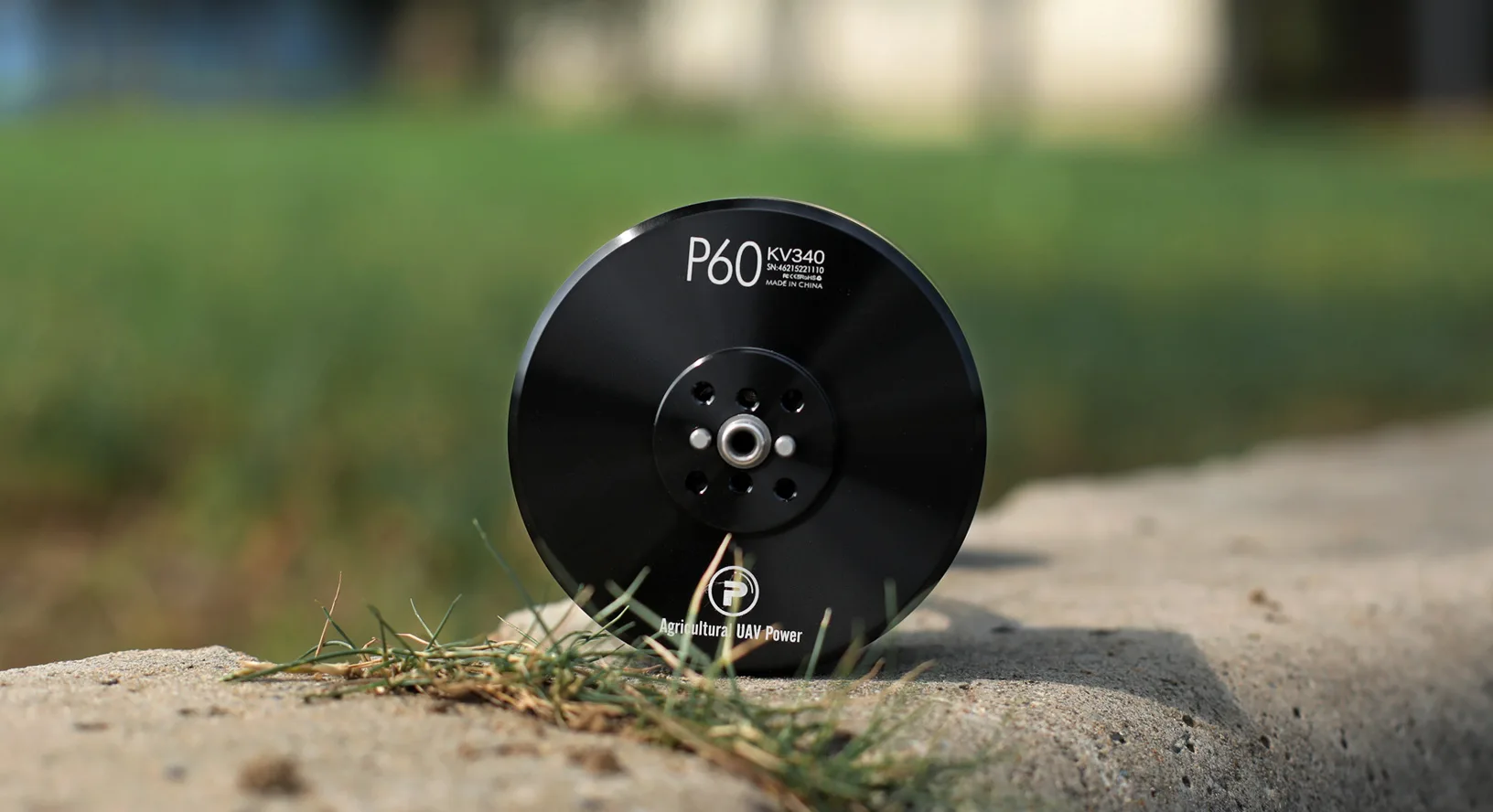
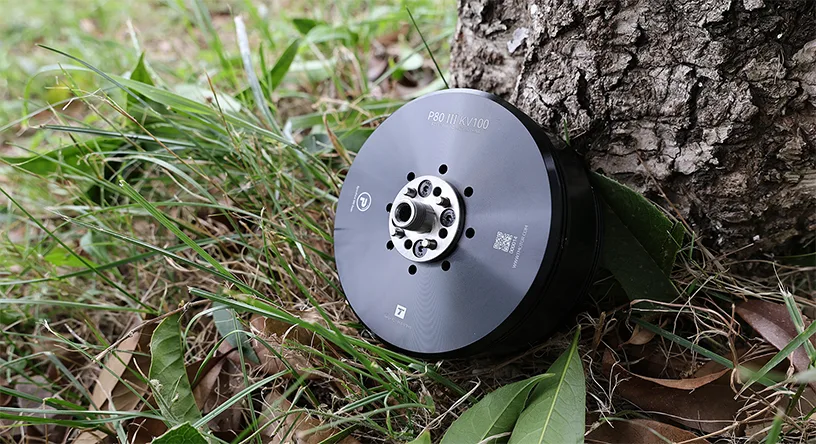
Motor KV alone does not determine efficiency. Battery voltage, propeller size, RPM, load, and ESC matching also affect performance. The motor should deliver the required thrust efficiently across the actual operating range.
Optimize ESCs: Reduce Electrical and Thermal Losses
ESC efficiency, control mode, and thermal performance affect overall propulsion efficiency, especially when agricultural drones operate at high power for extended periods.
ESC selection should consider operating voltage, continuous and peak current, and temperature rise—not just motor compatibility. Proper matching helps reduce electrical losses and maintain stable operation.
FOC (Field-Oriented Control) enables precise motor control, smoother output, and faster response. With a properly matched motor, ESC, and propeller, FOC can also improve efficiency and thermal performance. However, FOC does not guarantee a fixed level of energy savings; overall efficiency depends on the complete propulsion system.
Optimize Batteries: Balance Capacity and Weight
A larger battery does not always mean longer flight time. Higher capacity provides more energy but also adds battery weight, increasing the thrust and power required for flight.
Battery selection should consider capacity (Ah/Wh), battery weight, overall UAV weight, propulsion efficiency, and the actual operating cycle.
For agricultural drone developers, the goal is to provide sufficient usable energy without adding unnecessary weight—not simply to maximize battery capacity.
Optimize System Voltage: Reduce Current and Electrical Losses
System voltage affects electrical losses in high-power agricultural drone propulsion systems. At the same power, a higher operating voltage reduces current:
P = V × I
Lower current helps reduce resistive losses and heat in cables and connectors.
However, higher voltage does not automatically mean higher overall efficiency. The battery, motor KV, ESC, propeller, cables, and connectors must be matched to the selected voltage platform.
Therefore, voltage optimization should focus on reducing current and related losses while maintaining propulsion system compatibility.
How Do These Factors Affect Actual Flight Time and Operational Efficiency?
Weight, propellers, motors, ESCs, batteries, and system voltage all affect the actual energy consumption of an agricultural drone.
Reducing weight lowers thrust requirements, while optimizing propulsion matching can reduce energy consumption. Proper battery and system voltage selection helps balance available energy, UAV weight, and electrical losses.
These optimizations can lead to:
Longer flight time per mission
Fewer battery swaps
Greater coverage per unit time
Lower energy consumption per unit area
The goal of flight-time optimization is not simply to fly longer, but to complete more effective agricultural operations with less energy.
T-MOTOR Agricultural Drone Propulsion Solutions
Extending agricultural drone flight time requires coordinated optimization of the complete propulsion system—not simply replacing a battery, motor, or propeller.
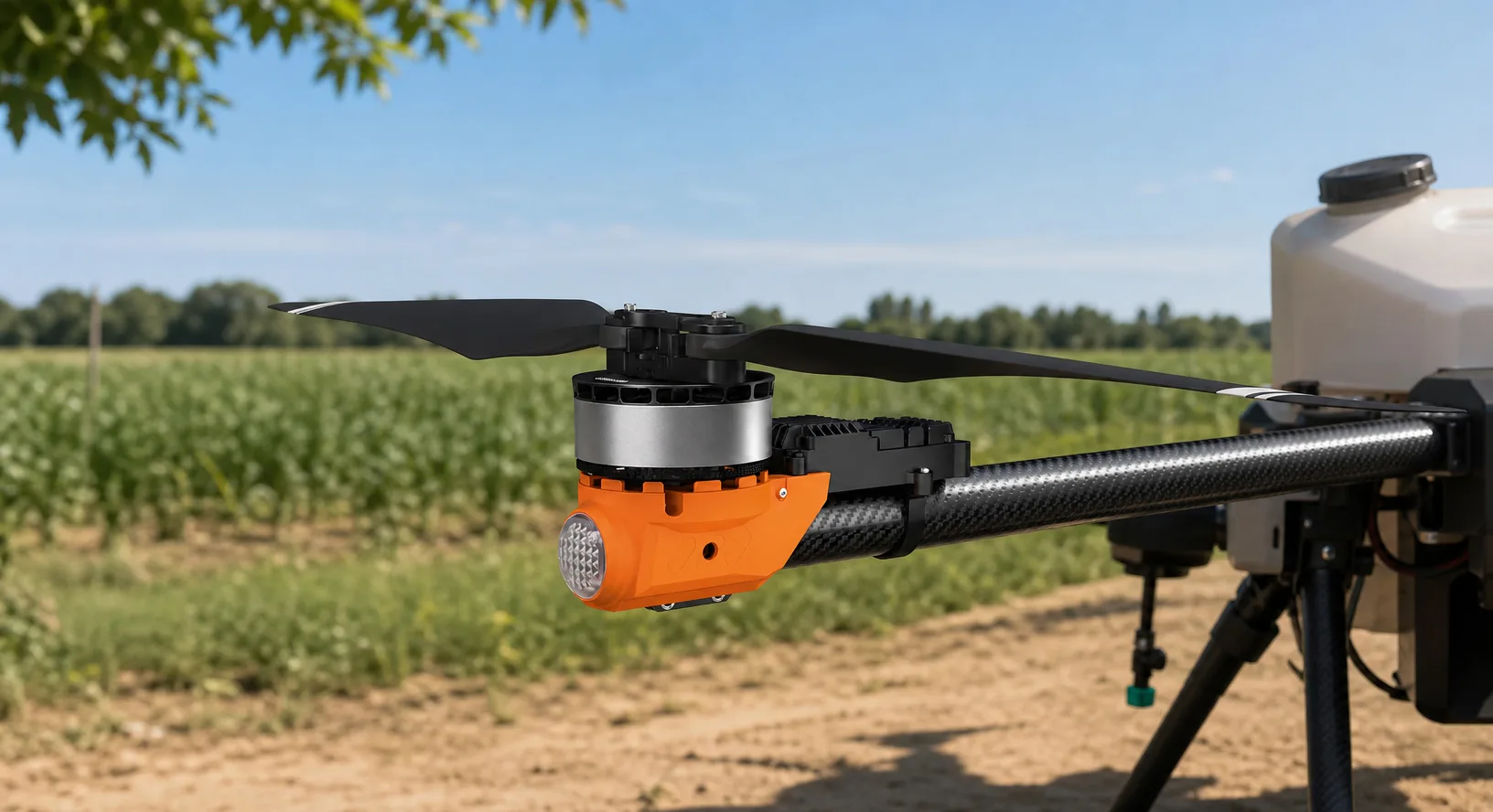
T-MOTOR provides integrated motor, ESC, and propeller combinations for agricultural drones. Configurations can be matched to payload, MTOW, operating voltage, and mission requirements to meet thrust demands while optimizing propulsion efficiency and energy use.
Limited flight time is not simply a battery capacity issue. It results from the combined effects of UAV weight, propellers, motors, ESCs, batteries, and system voltage.
The key to extending actual flight time is to meet payload and thrust requirements while reducing unnecessary power consumption and improving propulsion efficiency.
For agricultural drone developers, flight time is only one metric. Mission area per flight and energy consumption per unit area also matter. System-level propulsion optimization can help complete more effective agricultural operations with less energy.
Reduce UAV weight, optimize motor and propeller matching, minimize ESC and wiring losses, and properly select the battery and system voltage.
How do propellers affect agricultural drone flight time?
Propeller efficiency affects the power required for target thrust. Matching propeller size, pitch, RPM, and motor can help reduce energy consumption.
Does higher battery capacity always extend flight time?
No. Higher capacity adds battery weight, which can increase thrust and power requirements. Capacity, weight, and propulsion efficiency should be considered together.
Why can higher system voltage reduce energy consumption?
At the same power, higher voltage reduces current and resistive losses in cables and connectors. The voltage must still match the battery, motor, ESC, and propeller.
What metrics should be considered for agricultural drone flight-time optimization?
Consider flight time, energy consumption, area covered per flight, energy consumption per unit area, and battery swap frequency.