How Do Heat, Humidity, and Pesticide Corrosion Affect Agricultural Drone Propulsion System Reliability?
Published March:2026-08-18 · Updated:2026-08-19 · Elio
Table of Contents
Share This Article
Agricultural drones operate under high payloads, extended operating periods, and demanding agricultural environments. Their propulsion systems must deliver stable power while withstanding high temperatures, high humidity, and pesticide exposure.
These conditions can affect the performance, stability, and service life of motors, ESCs, and propellers. For UAV OEMs and operators, choosing a propulsion system with strong environmental adaptability is essential for improving operational efficiency, reducing total cost of ownership (TCO), and ensuring long-term reliability
Why Do Agricultural Drone Propulsion Systems Face Harsh Operating Conditions?
Compared with conventional drones, agricultural drones operate under high payloads, extended periods of continuous operation, and demanding agricultural environments. Their propulsion systems must deliver stable, continuous thrust while withstanding higher thermal, electrical, and mechanical loads.
During operation, high temperatures, high humidity, and pesticide exposure can affect the reliability of motors, ESCs, and propellers:
Challenge
Impact on the Propulsion System
High temperature
Increases thermal load, reduces efficiency, and accelerates component aging
High humidity
Reduces insulation performance and increases corrosion and short-circuit risks
Pesticide exposure
Accelerates corrosion of metal components and affects long-term reliability
Therefore, agricultural drone propulsion systems require strong environmental adaptability to ensure stable long-term operation.
How Does High Temperature Affect Agricultural Drone Propulsion Systems?
Agricultural operations are typically concentrated in hot seasons, requiring drones to operate continuously under high ambient temperatures and heavy payloads. Continuous heat accumulation increases propulsion system temperature, affecting the efficiency, power output, and long-term reliability of motors and ESCs.
- Effects of High Temperature on Motors
Prolonged operation at high temperatures may lead to:
Reduced efficiency: Higher winding temperatures increase resistance and copper losses, reducing energy conversion efficiency.
Reduced thrust output: Sustained high temperatures may cause irreversible demagnetization of permanent magnets.
Shortened service life: Accelerated insulation aging and increased wear of bearings and other mechanical components.
Therefore, agricultural drone motors need to meet thrust requirements while providing effective heat dissipation and reliable long-term operation.
- Effects of High Temperature on ESCs
Under high-temperature conditions:
Component temperature rise reduces electrical conversion efficiency.
Losses in key components such as MOSFETs increase, generating additional heat.
Excessive temperatures may trigger protection mechanisms and affect power output stability.
Therefore, effective heat dissipation and thermal management are essential for reliable ESC operation.
- Overall Impact of High Temperature on the Propulsion System
Extended high-temperature operation can lead to:
Reduced system efficiency
Fluctuating power output
Accelerated component aging
Reduced long-term reliability
For high-frequency agricultural operations, effective thermal management is critical to maintaining stable propulsion system performance.
How Does High Humidity Affect Agricultural Drone Propulsion Systems?
Agricultural operations are often carried out in high-humidity environments. Long-term moisture exposure can affect propulsion system reliability through interfaces, connectors, and structural gaps. Compared with short-term water exposure, continuous corrosion and reduced insulation performance require greater attention.
- Effects of High Humidity on Electrical Systems
When moisture enters the propulsion system, it may cause:
Corrosion of electronic components: Oxidation of PCBs and connectors can affect signal transmission and control stability.
Reduced insulation performance: Increased leakage and short-circuit risks can reduce electronic system reliability.
For agricultural drones operating over extended periods, effective electronic protection is essential for propulsion system stability.
- Effects of High Humidity on Motor Mechanical Structures
High humidity can also affect mechanical components inside the motor:
Bearing corrosion: Moisture ingress may cause metal oxidation and increase operating resistance.
Reduced lubrication performance: Moisture can degrade grease performance and accelerate mechanical wear.
Shortened service life: Long-term exposure to heat and humidity may reduce motor operating stability.
These issues can further affect motor stability and service life.
- Protection Requirements for High-Humidity Environments
For agricultural applications, propulsion systems require effective environmental protection, including water and dust resistance and sealing of critical components. These measures help reduce the long-term impact of moisture and improve reliability.
For agricultural drones, motors and ESCs should be selected based on the actual operating environment rather than a single performance parameter. Protection levels should be evaluated together with the spraying environment, cleaning methods, and long-term operating conditions.
How Does Pesticide Corrosion Affect Agricultural Drone Propulsion Systems?
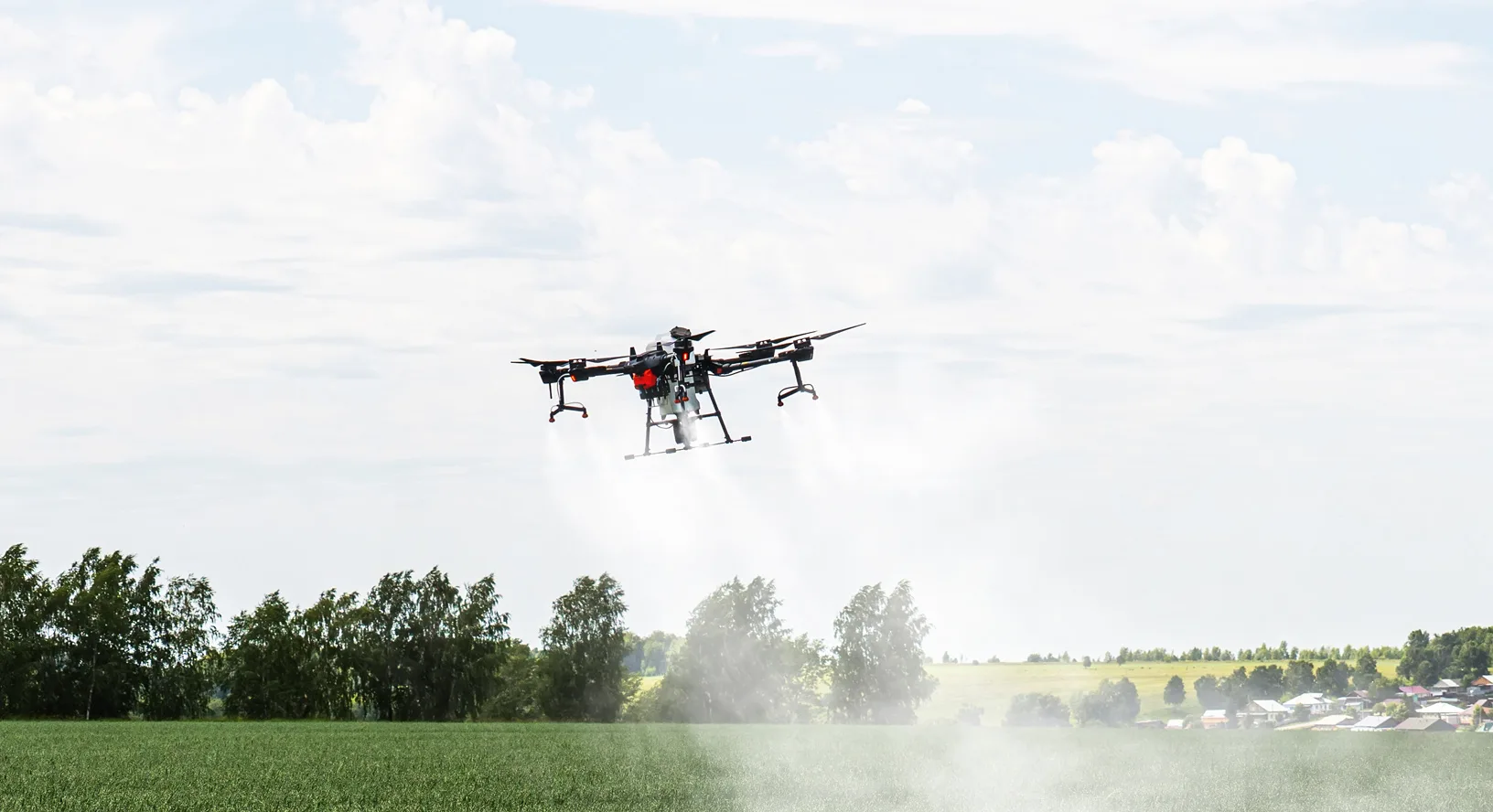
Unlike other drone applications, agricultural drones are regularly exposed to pesticide sprays. Chemical liquids and other agents can accumulate on propulsion system surfaces, affecting the long-term reliability of motors, ESCs, and propellers.
- Effects of Pesticides on Motors
Pesticide exposure may cause corrosion and performance degradation of motor mechanical components:
Corrosion of metal components: Affects the structural reliability of stators, rotors, and fasteners.
Bearing performance degradation: Chemical exposure may damage seals and lubrication, increasing wear risks.
Reduced operating stability: Long-term corrosion may affect motor service life and consistency of power output.
ESCs contain sensitive electronic components. Long-term exposure to pesticide spray may cause:
PCB corrosion: Chemical agents can corrode copper traces and conductors on circuit boards.
Component degradation: May cause solder joint failure, pin corrosion, and open circuits.
Reduced electrical reliability: Increases the risk of circuit control failure.
- Effects of Pesticides on Propellers
As high-speed rotating components, propellers also require good environmental adaptability:
Surface material degradation: Chemical solvents may damage the polymer matrix.
Structural performance changes: Surface microcracks may affect aerodynamic balance and stiffness.
Reduced long-term reliability: Increases the risk of fatigue failure under high-load operation.
Therefore, agricultural drone propulsion systems require protection designed for pesticide exposure to improve the long-term reliability of motors, ESCs, and propellers.
How to Choose a Reliable Agricultural Drone Propulsion System?
For agricultural environments involving high temperatures, high humidity, and pesticide exposure, a reliable propulsion system must provide not only sufficient thrust but also stable long-term operation. When selecting an agricultural drone propulsion system, motors, ESCs, propellers, and overall system matching should be considered together.
- Choose High-Reliability Motors
Agricultural drone motors need to meet both power output and environmental adaptability requirements:
High-efficiency operation: Reduces energy consumption and heat accumulation while improving flight endurance.
Effective heat dissipation: Controls temperature rise during extended operation and maintains stable output.
Environmental protection: Reduces the impact of humidity and pesticide exposure on internal components.
- Choose ESCs Designed for Agricultural Applications
ESCs directly affect propulsion system control and operating stability. Key factors include:
Sufficient current margin: Meets the demands of high-load flight.
Effective heat dissipation: Reduces failure risks under high-temperature conditions.
Environmental protection: Improves long-term reliability in demanding agricultural environments.
Structural strength: Provides high stiffness and fatigue resistance.
Corrosion resistance: Reduces degradation risks in complex environments.
Flight efficiency: Optimizes aerodynamic design to improve thrust efficiency (g/W).
- Prioritize Overall Propulsion System Matching
An agricultural drone propulsion system is not simply the sum of individual components. Reliable performance depends on the coordinated matching of motors, ESCs, and propellers:
Proper system design can:
Improve power output stability
Reduce operating temperature rise
Extend equipment service life
Reduce long-term maintenance costs (TCO)
Therefore, selecting a propulsion solution with system matching and environmental validation is essential for long-term agricultural drone reliability.
How Does T-MOTOR Meet These Requirements?
To address the reliability challenges of agricultural drones in high-temperature, high-humidity, and pesticide-corrosive environments, T-MOTOR provides stable and efficient propulsion solutions through the integrated design of motors, ESCs, and propellers.
- High-Reliability Power Design
T-MOTOR agricultural propulsion systems are optimized for long-duration and high-load operations:
High-efficiency power output: Reduces energy consumption and heat accumulation.
Optimized heat dissipation: Improves stability during continuous operation.
Enhanced structural reliability: Supports operation in complex agricultural environments.
- Protection Designed for Demanding Environments
For humid, high-temperature, and chemical environments, T-MOTOR propulsion systems focus on:
Protection of critical components: Reduces the impact of moisture and corrosion.
Agricultural drones face demanding operating conditions, including high payloads, high temperatures, high humidity, and pesticide exposure. A reliable propulsion system with strong environmental adaptability is essential for stable and efficient operation.
T-MOTOR provides high-reliability agricultural drone propulsion solutions, supporting customers from propulsion selection to system matching to improve operational efficiency and reduce maintenance costs.